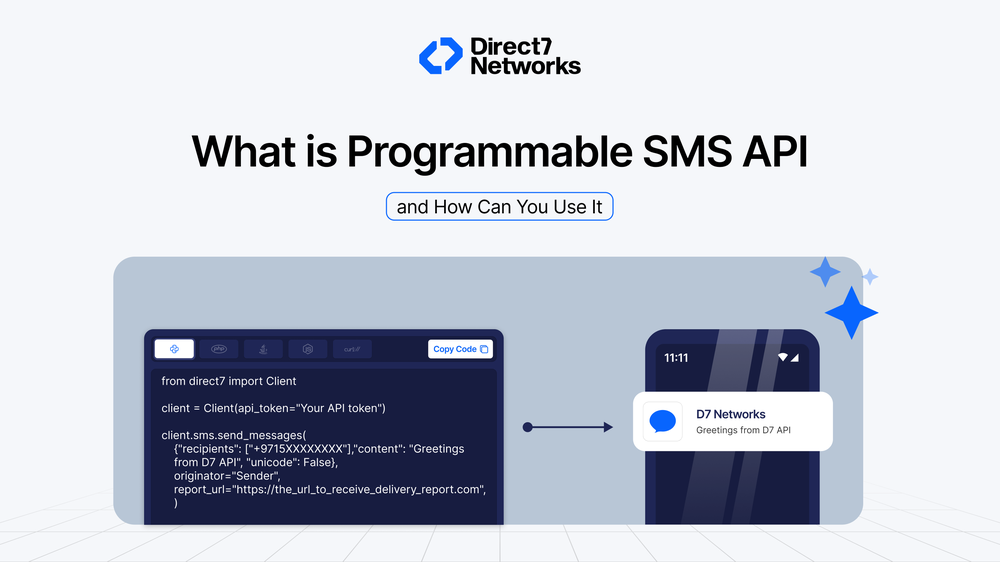

Programmable SMS API: A Complete Guide for Businesses and Developers
In today's digital scenario, businesses require efficient communication channels to connect with customers. SMS service is one of the most reliable and direct methods to reach users with high open rates and immediate visibility. However, sending text messages manually is neither scalable nor skilled for businesses handling large versions. This is where a programmable SMS API service comes in the game.
A programmable SMS API enables businesses to automate and integrate SMS messaging in its applications, websites, or CRM systems. This allows SMS messages to be sent, obtaining and managing programally. This article examines the concept, functionality, profit and best practices to avail programmable SMS API.
Businesses today depend on fast, reliable communication to interact with customers, deliver notifications, and secure digital services. Whether it is sending a one-time password during login, confirming an order, or notifying users about important updates, messaging plays a critical role in modern digital experiences.
Among all communication channels, SMS remains one of the most dependable. It works on virtually every mobile phone, does not require internet access, and has extremely high open rates. Because of this reliability, many organizations integrate SMS directly into their applications using a Programmable SMS API.
A programmable SMS API allows businesses to automate text messaging from websites, mobile apps, and backend systems. Instead of sending messages manually, organizations can trigger SMS notifications automatically when specific events occur.
This guide explains what a programmable SMS API is, how it works, its benefits, common use cases, and how developers can integrate messaging into their systems.
What Is a Programmable SMS API?
A Programmable SMS API (Application Programming Interface) is a software interface that enables developers to send and receive SMS messages automatically through applications.
Rather than relying on manual messaging tools, developers can integrate SMS capabilities directly into digital platforms.
This means messages can be triggered automatically when certain events occur, such as:
- A user signing up for an account
- A login attempt requiring verification
- A purchase confirmation
- A delivery status update
- An appointment reminder
For businesses, this automation improves efficiency, speeds up communication, and ensures that customers receive important information instantly.
How a Programmable SMS API Works
Although messaging APIs operate within complex telecom networks, the overall process is straightforward.
1. Application Trigger
An action within a system triggers the messaging process.
Examples include:
- A user requesting a password reset
- A payment being completed
- A delivery update being generated
The system detects the event and prepares a messaging request.
2. API Request
The application sends a request to the SMS API containing details such as:
- The recipient’s phone number
- Message content
- Sender ID
This request is usually sent through a REST API using JSON.
3. Messaging Platform Processing
The messaging platform validates the request and processes the message.
Key processes include:
- Authentication verification
- Message formatting
- Routing preparation
4. Carrier Network Routing
The message is then routed through telecom carriers and mobile network operators to reach the recipient's mobile device.
5. Delivery Confirmation
Once the message is delivered, the system can return delivery reports to confirm successful delivery.
These reports help businesses track messaging performance and troubleshoot issues if necessary.
Key Features of a Programmable SMS API
Programmable SMS APIs provide several features that enable businesses to automate communication and scale messaging operations.
Automated Messaging
Messages can be triggered automatically when specific events occur within an application or system.
Examples include:
- OTP verification
- Transaction notifications
- Service alerts
Global Message Delivery
Many messaging APIs support global SMS delivery, allowing businesses to communicate with customers across multiple countries.
Two-Way Messaging
Some APIs support two-way communication, enabling customers to respond to messages.
This can be useful for:
- Customer support
- Appointment confirmations
- Feedback collection
Message Scheduling
Businesses can schedule messages to be sent at specific times.
Examples include:
- Appointment reminders
- Marketing campaigns
- Event notifications
Personalization
Messages can be customized using dynamic data.
Example:
Hi Sarah, your order #5634 has been shipped.
Personalized messaging improves customer engagement and response rates.
Delivery Reports and Analytics
Messaging APIs often provide delivery status reports that allow businesses to track whether messages were delivered successfully.
Analytics can help monitor:
- Delivery success rates
- Message performance
- Engagement trends
Benefits of Using a Programmable SMS API
Businesses adopt online SMS Services because they provide several operational and communication advantages.
Instant Communication
SMS messages are delivered almost instantly, making them ideal for time-sensitive alerts and verification messages.
High Engagement Rates
SMS messages have significantly higher open rates compared to email or other digital channels, ensuring that critical messages are seen quickly.
Automation and Efficiency
By automating messaging workflows, businesses can reduce manual communication tasks and improve operational efficiency.
Global Accessibility
SMS works on nearly all mobile phones, making it one of the most accessible communication channels worldwide.
Scalability
Programmable SMS APIs allow businesses to send thousands or millions of messages automatically without manual intervention.
Common Use Cases of Programmable SMS APIs
SMS APIs support a wide range of communication scenarios across industries.
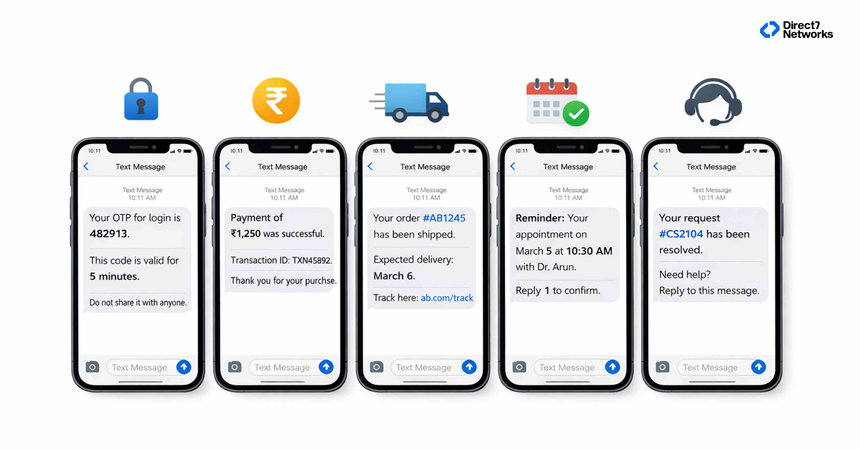
OTP Verification and User Authentication
Many digital platforms use SMS APIs to send one-time passwords (OTPs) for secure login and account verification.
Transaction Notifications
Businesses send transaction alerts to notify customers about payments, purchases, or account activities.
Order and Delivery Updates
E-commerce companies use SMS to send updates about order confirmations, shipping status, and delivery notifications.
Appointment Reminders
Healthcare providers and service businesses send reminders to reduce missed appointments.
Customer Support Notifications
Companies can send support updates, ticket confirmations, and service notifications via SMS.
Try the SMS API in 60 Seconds
Developers can quickly test SMS delivery by sending a message using a simple API request. The example below demonstrates how to send your first SMS using a programmable SMS API.
Step 1: Get Your API Token
Create an account with your SMS API provider and generate an API authentication token. This token will be used to authorize requests when sending messages.
Step 2: Send a Test SMS
Run the following curl command from your terminal or API testing tool such as Postman.
curl --request POST \
https://api.d7networks.com/messages/v1/send \
--header "Authorization: Bearer YOUR_API_TOKEN" \
--header "Content-Type: application/json" \
--data '{
  "messages": [
    {
      "originator": "SignOTP",
      "recipients": ["+1234567890"],
      "content": "Your verification code is 4821",
      "msg_type": "text",
      "data_coding": "text"
    }
  ]
}'
Step 3: Message Processing and Delivery
The messaging platform validates requests and routes messages to the recipient's device. The API responds with success or error status using HTTP codes.For example:
- 200 – request accepted
- 400 – invalid request parameters
- 403 – authentication failure
Step 4: Track Delivery Status
SMS APIs provide delivery reports via webhooks or status queries, helping businesses monitor performance and troubleshoot issues.
Flexible Messaging Options
Messaging APIs often support several advanced capabilities, including:
- Sending a single SMS to one recipient
- Sending bulk messages to multiple recipients
- Delivering Unicode messages for non-Latin languages
- Scheduling messages for a specific time
- Sending personalized messages to different users in one request
This flexibility allows developers to build scalable messaging systems for notifications, authentication, alerts, and marketing communication.
Supported Integration Languages
Most SMS APIs can be integrated using common programming languages such as:
- Python
- Node.js
- Java
- PHP
- C#
- Go
Developers can use standard HTTP libraries to send requests or use SDKs when available.
SMS Compliance and Messaging Regulations
When using SMS APIs, businesses must follow messaging regulations to ensure responsible communication.
Key compliance considerations include:
Customer Consent
Customers should provide clear consent before receiving promotional messages.
Opt-Out Options
Recipients must have the ability to unsubscribe from messaging services.
Data Privacy Regulations
Businesses must adhere to the regulations of each country to successfully send SMS messages and avoid being classified as spam.
Best Practices for Using a Programmable SMS API
To maximize the effectiveness of SMS communication, businesses should follow several best practices.
Send Relevant Messages
Avoid sending unnecessary or excessive messages that may annoy customers.
Respect Time Zones
Schedule messages according to the recipient’s local time to ensure appropriate delivery hours.
Personalize Communication
Using customer data to personalize messages increases engagement and response rates.
Keep Messages Clear and Concise
SMS messages should be simple and easy to understand.
Short messages are more effective.
How to Choose the Right SMS API Provider
Selecting the right SMS API provider is an important decision for businesses that rely on messaging for communication and authentication.
Consider the following factors when evaluating providers.
Global Coverage
Ensure the provider can deliver messages in the countries where your customers are located.
Reliable Delivery Rates
Look for providers with strong carrier connections and high message delivery reliability.
Developer-Friendly Documentation
Clear API documentation simplifies integration and reduces development time.
Security Features
Choose providers that offer authentication, encryption, and secure messaging infrastructure.
Technical Support
Reliable support is essential for resolving integration or delivery issues quickly.
The Future of Programmable Messaging
Messaging technology continues to evolve as businesses adopt more advanced communication strategies.
Future trends in programmable messaging include:
- AI-driven messaging automation
- Omnichannel messaging platforms
- Integration with messaging apps such as WhatsApp
- Conversational customer engagement
As digital communication grows more sophisticated, programmable messaging APIs will remain a critical tool for businesses seeking scalable and reliable communication solutions.
Conclusion
Programmable SMS APIs enable businesses to automate messaging, improve customer engagement, and deliver real-time notifications directly through their applications and platforms.
From OTP authentication and transaction alerts to marketing campaigns and customer support, SMS APIs help organizations create fast, reliable, and scalable communication systems.
As businesses continue to prioritize digital customer experiences, integrating programmable SMS APIs can significantly enhance operational efficiency and communication effectiveness.