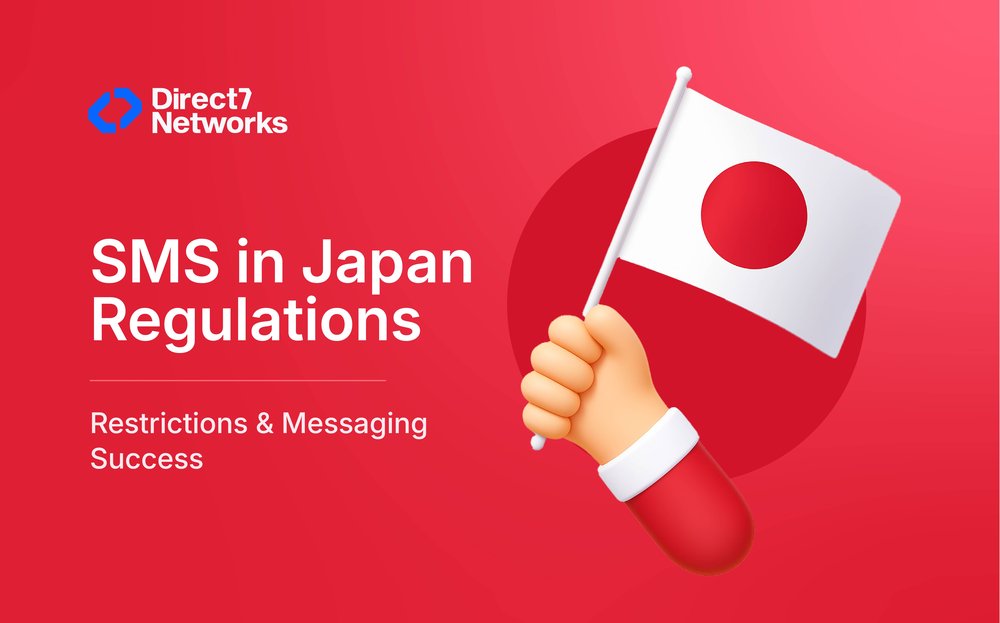

SMS In Japan: Navigating Regulations and Mastering Best Practices
The SMS regulations and messaging standards in Japan
What are the SMS regulations in Japan?
SMS in Japan is regulated by the Ministry of Internal Affairs and Communications and enforced through the country's major mobile network operators — NTT Docomo, KDDI, Softbank, and Rakuten. Businesses sending SMS to Japanese mobile numbers must use a dynamic alphanumeric sender ID, avoid URLs and generic sender names, obtain explicit opt-in consent, and send messages only during local daytime hours. Japan does not support peer-to-peer (P2P) SMS traffic for business messaging.
Japan has more mobile connections than people, and SMS remains the second-most-used business communication channel in the country after email. For any company sending transactional alerts, OTPs, or marketing messages to Japanese customers, understanding these rules isn't optional;non-compliant traffic gets filtered or blocked before it reaches the handset.
Japan country and network snapshot
| Country code | JP |
| Calling code | +81 |
| Mobile Number Portability (MNP) | No |
| Mobile Country Codes (MCC) | 440, 441 |
| Regulatory Authority | Ministry of Internal Affairs and Communications |
| Major carriers | NTT Docomo, NTT East, NTT West, KDDI, Softbank, Rakuten |
| Smaller carriers | UQ Communications, Y!Mobile, IIJ |
SMS Regulations in Japan
Is an alphanumeric sender ID allowed in Japan?
Yes. Dynamic alphanumeric sender IDs are permitted across all Japanese networks, which lets businesses send SMS under a recognizable brand name rather than a random long code. However, generic or unbranded sender IDs — such as "INFO," "SMS," or "NOTICE" — are not accepted by carriers and will typically be rejected.
Can you include links in SMS messages sent to Japan?
No. URLs are strictly prohibited in SMS content delivered to Japanese numbers. Any message containing a weblink is filtered or blocked at the carrier level. This is one of the most common reasons international senders see failed delivery in Japan, so link-based CTAs need to be replaced with plain-text instructions or short codes.
What is the SMS character limit in Japan?
Character limits vary slightly by carrier for Unicode (non-Latin script) messages:
- NTT Docomo, KDDI, Softbank: up to 670 full-width characters
- Rakuten: up to 660 full-width characters
Messages exceeding these limits are typically split into multiple segments and billed accordingly.
What content is restricted on SMS in Japan?
Carriers filter or block messages containing:
- Political or religious content
- Unsolicited promotional messages without consent
- Gambling-related content
Businesses are also required to screen recipient numbers against Do-Not-Disturb (DND) and Do-Not-Call (DNC) registries before sending.
Do you need consent to send SMS in Japan?
Yes. Explicit opt-in consent is mandatory before sending any marketing message — implied consent from a prior purchase or sign-up elsewhere does not count. In addition to consent requirements, senders must:
- Deliver messages only during the recipient's local daytime hours
- Support HELP and STOP commands in Japanese
- Expect equal per-message billing rates for both domestic and international SMS traffic
P2P (person-to-person) traffic is not supported on Japanese networks, so all business messaging must run through Application-to-Person (A2P) routes.
Best Practices for SMS in Japan
To get the most out of your SMS marketing strategy in Japan, while staying compliant, follow these proven best practices:
1. Obtain Clear Consent
Always ensure customers opt in before receiving marketing messages. Opt-in must be explicit, not implied.
2. Avoid Outdated Lists
Don’t use old or purchased contact lists. Ensure all numbers are active and recently acquired.
3. Audit and Clean Customer Lists
Regularly verify the validity of mobile numbers and remove inactive or unsubscribed users.
4. Maintain Message Logs
Keep detailed records of consent, timestamps, and message history for compliance purposes.
5. Support Opt-Out
Provide an easy and accessible way for users to stop receiving messages (e.g., replying "STOP").
6. Respect Local Timing
Send messages during business hours in Japan to avoid customer frustration and potential violations.
7. Monitor Engagement Metrics
Track delivery, open, and response rates. Adjust your strategy to focus on active and engaged users.
Why SMS in Japan is Still Powerful
Despite the rise of apps like LINE and WhatsApp, SMS in Japan remains a critical communication tool due to its reach, reliability, and immediacy. Businesses using compliant, personalized SMS campaigns enjoy better engagement and customer satisfaction.
Whether you’re sending appointment reminders, alerts, OTP verifications, or transactional updates, SMS continues to offer unmatched delivery rates in Japan's mobile-first market.
Ready to Start Messaging in Japan?
Ensure your business complies with SMS regulations in Japan while unlocking the full potential of mobile messaging.
📩 Contact our sales team to learn more and integrate a compliant SMS solution for your business in Japan.