
What is SMS Verification? Complete 2026 Guide to OTP Authentication, Security & Business Use
Every online business faces the same challenge: confirming that the person creating an account, logging in, or completing a transaction is genuinely authorized. As digital fraud becomes more sophisticated, passwords alone are no longer enough to protect customer accounts.
SMS verification adds an extra layer of security by confirming that users have access to the mobile number associated with their account. It remains one of the most widely used authentication methods because it combines strong security with a simple user experience across virtually every mobile device.
This guide explains what SMS verification is, how it works, where it is most effective, its limitations, and the best practices businesses should follow when implementing SMS-based authentication.
What Does SMS Verification Mean?
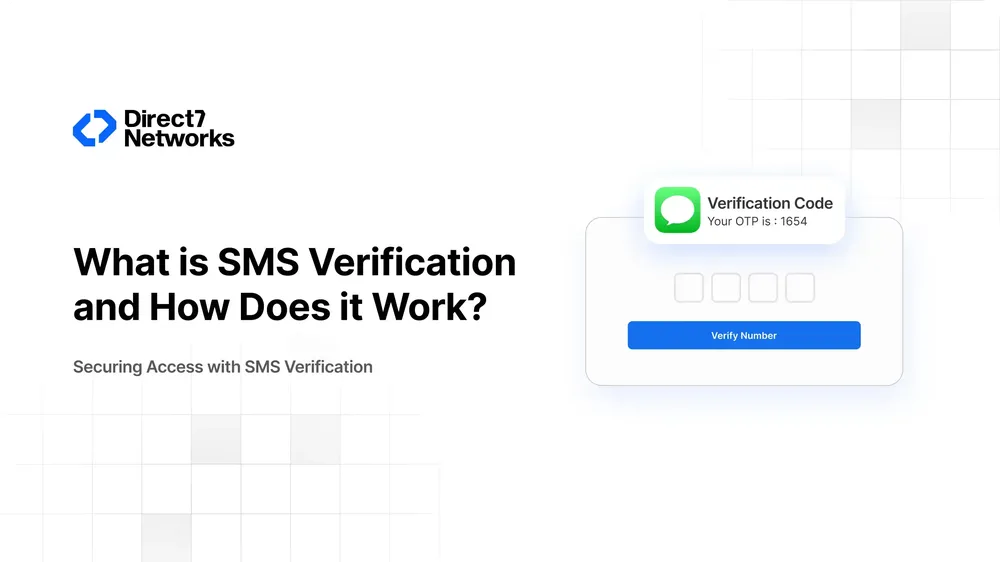
SMS verification is a method of confirming a user’s identity by sending a one-time password (OTP) to their mobile phone.
In simple terms, if you’re asking “what is SMS verification?” it is a process that ensures:
- The phone number is valid and active
- The user has physical access to that number
For example, when logging into Amazon or Flipkart, users receive a one-time code via SMS. Entering this code confirms their identity.This is a form of two-factor authentication (2FA), adding a second security layer beyond passwords.
Why SMS Verification Is Important for Businesses
SMS verification is not just a security feature, it’s a business-critical tool.
Key Business Benefits
- Prevents fake registrations & bots
- Reduces fraud and chargebacks
- Improves lead quality in marketing
- Ensures compliance with regulations (GDPR, PSD2)
- Builds customer trust
For example, verifying phone numbers before onboarding ensures businesses don’t waste resources on fake users.
Is SMS Verification the Right Choice for Your Business?
Before implementing SMS verification, businesses should evaluate whether it aligns with their security requirements and customer experience goals.
What level of fraud risk does your business face?
Businesses handling financial transactions or sensitive customer data generally benefit from stronger identity verification than those protecting low-risk accounts.
How important is user convenience?
SMS verification works on almost every mobile phone without requiring customers to install additional applications, making it one of the easiest authentication methods to adopt.
Do your customers have reliable internet access?
Unlike authenticator applications, SMS verification can work on basic mobile devices and does not require a smartphone or internet connection to receive verification codes.
Do you operate internationally?
If your customers are spread across multiple countries, ensure your messaging provider offers reliable global coverage and local carrier connectivity.
Does your industry require regulatory compliance?
Industries such as banking, healthcare, and fintech often require stronger identity verification to meet regulatory requirements and reduce fraud.
Could stronger authentication be necessary?
For high-risk activities such as large financial transactions or administrative access, combining SMS verification with biometrics or authenticator apps provides stronger protection than SMS alone.
How SMS Verification Works
The SMS authentication process is simple:
- User enters login/signup details
- System generates a time-sensitive OTP
- OTP is sent via SMS
- User enters the code
- System verifies access
For instance, apps like Google Pay require OTP verification for every transaction to prevent unauthorized payments.
A reliable SMS verification system involves more than simply sending an OTP. Businesses should generate random, time-sensitive verification codes, enforce secure expiration periods, and limit the number of verification attempts to reduce brute-force attacks.
Successful implementations also monitor delivery rates, verification success rates, and failed authentication attempts. Many organizations provide fallback channels such as voice OTP or WhatsApp verification when SMS delivery is delayed.
Common SMS Verification Mistakes Businesses Make
Sending OTPs to Unvalidated Numbers
Sending verification codes without first validating phone numbers increases delivery failures and unnecessary messaging costs.
Allowing Unlimited Verification Attempts
Unlimited retries make brute-force attacks significantly easier. Implement retry limits and temporary account lockouts after repeated failures.
Using Long OTP Expiration Windows
Verification codes should remain valid only for a short period. Extended validity increases the opportunity for unauthorized use.
Depending Solely on SMS for High-Risk Transactions
SMS verification provides strong protection for many use cases but should be combined with additional authentication methods for sensitive financial or administrative actions.
Ignoring Delivery Monitoring
Tracking delivery rates, failed verifications, and authentication success helps identify carrier issues and improve user experience.
Benefits of SMS-Based Authentication
1. Strong Security Against Account Takeover
Even if passwords are compromised, attackers cannot access accounts without the OTP.
2. Global Accessibility
SMS works on all devices, no apps or internet required.
3. High Engagement Rates
SMS messages have ~98% open rates, ensuring fast verification.
4. Cost-Effective and Scalable
Easy to implement via APIs without heavy infrastructure.
5. Improves Marketing ROI
By verifying phone numbers, businesses ensure they are engaging with real users, not bots.
6. Simple Integration with Existing Systems
Most businesses can implement SMS verification using APIs without redesigning their authentication systems. This allows developers to add secure phone verification with minimal infrastructure changes.
7. Better Customer Experience
SMS verification provides a familiar authentication process that most users already understand, reducing friction during registration and login.
SMS Verification vs Other Authentication Methods
| Authentication Method | Security | Ease of Use | Accessibility | Best Use Case |
|---|---|---|---|---|
| SMS OTP | High | Very Easy | Very High | Global apps like Google Pay |
| Authenticator Apps | Very High | Medium | Medium | Advanced users |
| Biometrics | Very High | Easy | Device-dependent | Smartphones |
| Email Verification | Medium | Easy | High | Low-risk accounts |
Challenges and Security Risks
While SMS verification is effective, it is not perfect.
Key Risks
- SIM swapping attacks
- Message interception risks (no end-to-end encryption)
- Device loss or theft
- Network delays
SMS is secure but not a standalone solution.
While SMS verification remains highly effective, businesses should understand its limitations. SIM swap attacks, compromised mobile devices, and social engineering can still bypass SMS authentication under certain circumstances.
For higher-risk scenarios, organizations should consider combining SMS verification with device fingerprinting, behavioral analytics, or authenticator applications to strengthen overall security.
How SMS Verification Prevents Fraud
SMS verification protects against:
- Credential stuffing attacks
- Fake account creation (bots)
- Unauthorized transactions
- Account takeovers
Because OTPs are:
- Time-sensitive
- Single-use
They significantly reduce fraud risk compared to passwords alone.
Best Practices for SMS Verification (2026)
To maximize effectiveness, businesses should:
1. Use Short OTP Expiry Times
- 30–120 seconds recommended
2. Limit Retry Attempts
- Prevent brute-force attacks
3. Enable Fallback Channels
- WhatsApp OTP
- Voice OTP
4. Combine with Risk-Based Authentication
- Trigger OTP only for suspicious actions
5. Validate Phone Numbers Before Sending OTP
- Reduces cost and improves delivery
6. Monitor OTP Delivery Performance
Regularly monitor delivery success rates, verification completion rates, and authentication failures to identify potential routing or carrier issues.
7. Implement Rate Limiting
Restrict OTP requests from the same user, device, or IP address to reduce automated abuse.
8. Personalize Verification Messages
Include your company name within verification messages so users can immediately recognize the sender and identify potential phishing attempts.
SMS Verification Use Cases Across Industries
- E-commerce: Secure logins & order confirmations (e.g., Amazon). Verify customer accounts during registration, secure checkout, confirm purchases, and reduce fraudulent orders.
- Fintech: Transaction authentication (e.g., Google Pay). Protect account logins, authorize financial transactions, and strengthen compliance with financial regulations.
- Social Media: Account protection (e.g., WhatsApp).Reduce fake account creation, prevent account takeovers, and improve platform security.
- Healthcare: Patient identity verification.Confirm patient identities before accessing medical records, scheduling appointments, or receiving healthcare notifications.
- SaaS Platforms: Secure administrator access, password resets, and customer account verification while maintaining a smooth onboarding experience.
Is SMS Verification Secure in 2026?
SMS verification remains one of the most widely deployed authentication methods because it balances accessibility, usability, and security. While it is not immune to sophisticated attacks, it provides significantly stronger protection than passwords alone.
For organizations handling sensitive financial information or privileged accounts, SMS verification should be combined with additional controls such as device fingerprinting, adaptive authentication, biometrics, or authenticator applications. A layered security strategy offers stronger protection while maintaining a smooth customer experience.
Future Trends in SMS Authentication
AI-Powered Fraud Detection
Artificial intelligence is increasingly used to identify suspicious login behavior before verification codes are sent.
Omnichannel Authentication
Businesses are expanding beyond SMS by combining verification through WhatsApp, email, voice calls, and push notifications.
Passwordless Authentication
Many organizations now use verified phone numbers as the primary login credential, reducing reliance on traditional passwords.
Rich Communication Services (RCS)
RCS enables branded, interactive verification messages with improved customer trust and engagement compared with traditional SMS.
Adaptive Authentication
Modern authentication systems evaluate device information, user behavior, and login risk before deciding whether additional verification is required.
How D7 Networks Helps
D7 Networks provides a scalable SMS verification solution with:
- Global OTP delivery (190+ countries)
- High delivery success rates
- Easy API integration
- Advanced security features
- 24/7 support
Conclusion
SMS verification has become a core component of modern digital identity verification. By confirming phone number ownership through one-time passwords, businesses can reduce fraud, protect customer accounts, and improve trust without introducing unnecessary complexity.
While SMS verification remains one of the most accessible authentication methods available, its effectiveness depends on proper implementation. Short OTP validity periods, secure retry limits, reliable delivery infrastructure, and layered security controls all contribute to stronger authentication outcomes.
Businesses implementing SMS verification at scale should also focus on monitoring delivery performance, optimizing authentication workflows, and combining SMS with complementary security technologies when appropriate. Solutions such as D7 Networks help organizations deliver reliable global SMS verification while supporting secure, scalable customer authentication.