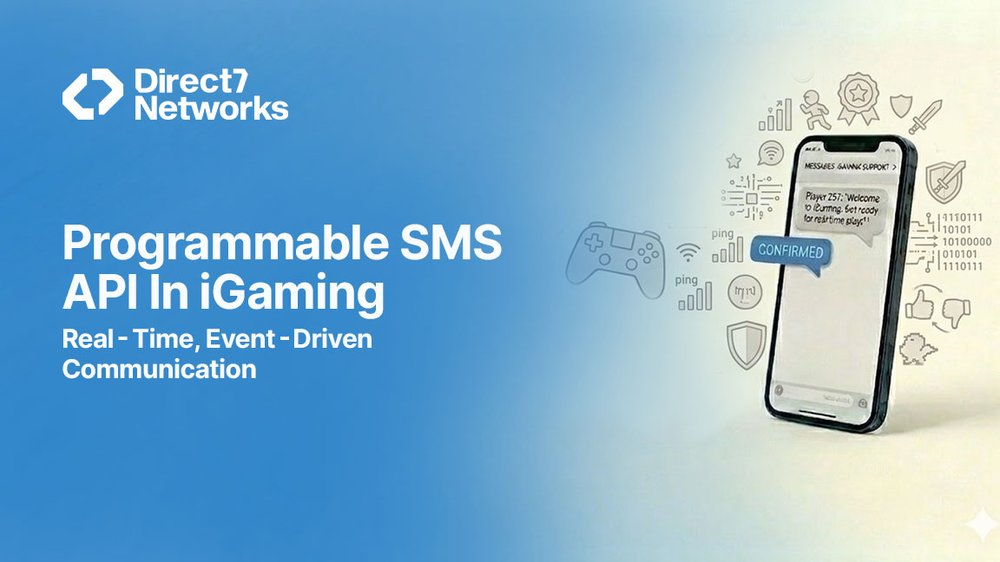

Programmable SMS in iGaming: Real-Time, Event-Driven Communication
A player places a bet.
The odds change seconds later.
A goal is scored.
A withdrawal is approved.
In iGaming, moments matter. When communication lags behind events, players feel disconnected or worse, unsure whether the platform is working in their favor. This is where programmable SMS quietly earns its place. Not as marketing noise, but as real-time infrastructure that keeps players informed, confident, and engaged when it matters most.
For business, product, marketing, and operations teams, programmable SMS is no longer about “sending messages.” It’s about reacting to live events with precision, speed, and intent.
What makes programmable SMS different in iGaming
Traditional SMS campaigns are scheduled. Programmable SMS is triggered.
In iGaming platforms, messages are sent automatically based on real events inside the system:
- A bet is placed or settled
- A deposit succeeds or fails
- A withdrawal is approved
- An account is flagged for review
- A game or tournament starts
The message isn’t planned days in advance. It’s generated by logic, rules, and APIs the moment something happens.
This event-driven approach changes how teams think about communication. SMS becomes part of the product flow, not a separate marketing channel.
Why iGaming platforms rely on SMS even with apps and email
It’s tempting to think push notifications or email can replace SMS. In practice, they don’t.
SMS still wins in iGaming because:
- It reaches users instantly, even without data
- It works across devices, regions, and network conditions
- It has high open rates for transactional messages
- It’s trusted for money-related updates
When a withdrawal is approved or a bet is settled, players don’t want to “check the app later.” They want confirmation now.
Programmable SMS delivers that certainty.
The core use cases that actually matter
Instead of listing every possible scenario, it’s more useful to group SMS use cases by intent.
1. Transactional certainty
These messages answer one question: Did it work?
Examples:
- Deposit confirmation
- Withdrawal approval or delay notice
- Bet settlement result
- Bonus credited
Clear, immediate messages reduce support tickets and prevent players from retrying actions unnecessarily.
A simple rule here:
If money moves, SMS should follow.
2. Time-sensitive alerts
Some events lose value if communicated late.
Examples:
- Live game starting reminders
- Odds changes on watched events
- Cash-out availability alerts
- Tournament registration deadlines
These messages don’t push promotions. They protect relevance. The timing matters more than the copy.
3. Risk and compliance communication
This is where programmable SMS supports operations and compliance teams.
Examples:
- Account verification reminders
- Suspicious activity alerts
- Temporary account restrictions
- Responsible gaming notifications
SMS works well here because it feels official and urgent without being aggressive.
4. Re-engagement based on real behavior
This is where marketing teams often get it wrong and programmable SMS helps get it right.Instead of generic “We miss you” messages, event-driven SMS responds to behavior:
- A player abandons a bet mid-flow
- A wallet balance remains unused
- A bonus expires soon
- A favorite game is back online
These messages feel relevant because they’re tied to something the user actually did.
A simple framework for designing SMS triggers
Not every event deserves an SMS. Too many messages kill trust fast.
A practical way to decide is the MVT framework:
Money
Does this event affect the player’s balance, winnings, or payouts?
Volatility
Does the value of this event change quickly with time?
Trust
Would silence here create doubt or anxiety?
If an event scores high on at least two of these, SMS is usually justified.
This keeps communication focused and prevents overuse.
What good programmable SMS looks like in practice
Let’s walk through a realistic flow.
A player places a live bet during a match.
1. Bet placed
SMS: “Your bet on Team A vs Team B is confirmed.”
2. Odds shift significantly
Optional SMS if the player opted in: “Cash-out available at ₹X.”
3. Match ends
SMS: “Your bet has settled. Winnings: ₹X.”
4. Withdrawal requested
SMS: “Withdrawal request received.”
5. Withdrawal approved
SMS: “₹X has been processed to your account.”
Each message has a clear purpose. None of them sell. All of them reassure.
Common mistakes teams make with programmable SMS
Even experienced platforms stumble here.
Treating SMS like a marketing blast
Transactional and event-driven messages should feel neutral and factual. Over-branding erodes trust.
No preference control
Players should be able to choose which alerts they receive. Forced alerts increase opt-outs.
Ignoring regional delivery quality
SMS delivery speed and reliability vary by country. What works in one region may lag in another.
No failure handling
If an SMS fails, is there a retry? A fallback channel? Silence is the worst outcome.
How programmable SMS supports different teams
One reason SMS infrastructure often underperforms is ownership confusion. It touches multiple teams.
Product teams
Use SMS to close feedback loops inside the user journey. If something happens, the user knows.
Marketing teams
Trigger messages based on behavior, not assumptions. Relevance beats frequency every time.
Operations teams
Reduce inbound support by proactively confirming actions and delays.
Compliance teams
Deliver mandatory notifications reliably and with audit logs.
When SMS is treated as shared infrastructure instead of a single-team tool, its impact multiplies.
Choosing the right programmable SMS setup
The SMS API matters, but so does what surrounds it.
Look for:
- Event-based triggering, not just bulk sending
- Real-time delivery reports
- Regional routing optimization
- Retry and fallback logic
- Easy integration with game engines, wallets, and CRM systems
Platforms like D7 Networks are often used by iGaming operators because they support programmable, event-driven SMS at scale while handling regional delivery complexities behind the scenes.
The best setup is one you don’t have to think about during peak traffic or live events.

Why players rarely complain about good SMS but always notice bad SMS
Players won’t praise a platform for sending a fast confirmation. They expect it.
But delays, missing messages, or irrelevant alerts are remembered and shared.
Programmable SMS succeeds when it feels invisible.It fails when it feels noisy or unreliable.
Final thoughts
Programmable SMS in iGaming isn’t about more messages. It’s about the right message, triggered by the right event, delivered at the right moment.
When communication matches the pace of the game, trust grows naturally.
When it lags behind, confidence drops fast.
Treat SMS as real-time infrastructure, not a broadcast channel, and it quietly becomes one of the most dependable parts of the platform.