
Short Code Texting Service: Unlock the Power of SMS Communication
Short codes remain one of the fastest and most reliable ways to deliver high-volume SMS traffic, but they are no longer the only option available to businesses.
Today’s messaging ecosystem includes short codes, 10DLC, toll-free SMS, and messaging APIs. Each option serves different communication needs, from large-scale marketing campaigns to OTP delivery and customer support conversations.
Choosing the right messaging channel depends on factors such as throughput, compliance requirements, customer engagement goals, and geographic coverage. This guide explains where short codes fit into modern messaging strategies and when alternative options may be a better choice.
What is SMS Short Code Texting Service ?
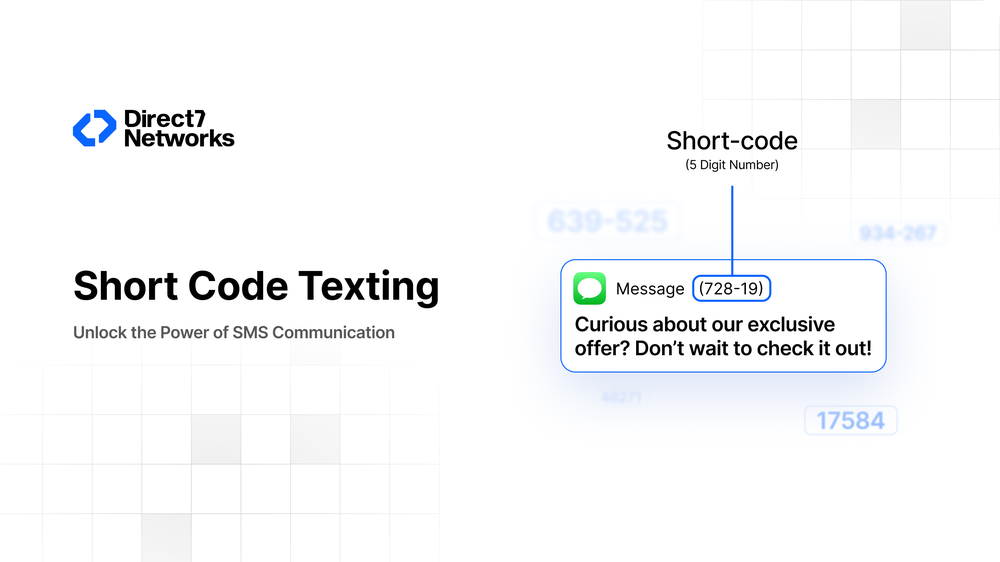
An SMS short code is a special telephone number, which is much lower than the standard phone number, which usually consists of 5 to 6 digits. These codes are used by businesses and organizations to send and receive high versions of text messages efficiently. The smaller codes make them easy to remember, facilitating the spontaneous interaction between businesses and their customers.
short codes are particularly beneficial for mass texting campaigns, allowing organizations to transmit wide audiences to broadcast rapid information. They are usually used for various purposes, including marketing promotion, alerts, two-factor authentication and customer service communication.
To operate a short code, businesses must lease the number from a governing body, such as Common Short Code Administration (CSCA) in the United States. The process includes an application describing the case of intended use, ensuring compliance with the rules and carrier requirements of the industry. Once approved, the miniature codes can be used to send messages to customers who have opted to get communication.
Short Code vs 10DLC vs Toll-Free SMS
| Feature | Short Code | 10DLC | Toll-Free SMS |
|---|---|---|---|
| Throughput | Very High | Moderate | Moderate to High |
| Brand Registration | Required | Required | Verification Recommended |
| Setup Time | Longer | Faster | Moderate |
| Marketing Campaigns | Excellent | Good | Good |
| OTP Messaging | Excellent | Good | Good |
| Customer Support Conversations | Limited | Strong | Strong |
| Cost | Higher | Lower | Moderate |
Many businesses now evaluate all three options before launching SMS programs. The right choice depends on message volume, compliance requirements, customer engagement goals, and expected growth.
The Different Types of Short Codes
Short codes come in various forms, each catering to specific business needs and use cases. Understanding these types will help you choose the most suitable option for your SMS communication strategy.
Shared Short Codes
Shared short codes are single short code numbers utilized by multiple businesses simultaneously. Each business distinguishes its messages using unique keywords. For example, if multiple companies use the short code 12345, one might use the keyword "SALE" while another uses "INFO" to differentiate their campaigns.
Advantages:
Cost-Effective: Since multiple businesses share the same short code, the costs are distributed, making it a more affordable option.
Disadvantages:
Limited Control: The actions of one business can affect others sharing the same code, especially if spam complaints arise.
Regulatory Changes: Due to increased regulations and concerns over spam, many carriers are phasing out shared short codes, limiting their availability.
Vanity Short Codes
Vanity short codes are customized numbers that businesses can select to align with their brand or make them more memorable. For instance, a company might choose the short code 32665, which spells "FBOOK" on a keypad, corresponding to Facebook.
Advantages:
Brand Recognition: A memorable number enhances brand recall and customer engagement.
Customization: Allows businesses to choose a number that resonates with their audience or reflects their brand identity.
Disadvantages:
Higher Cost: Customizing a short code often incurs additional fees compared to random short codes.
Availability: Desired combinations may already be in use or unavailable.
Dedicated Short Codes
Dedicated short codes are exclusive to a single business, ensuring complete control over messaging and branding. Unlike shared short codes, no other organization can use the same number.
Advantages:
Full Control: Businesses can manage their SMS campaigns without interference from other organizations.
Higher Deliverability: Since dedicated short codes comply with carrier regulations, messages are less likely to be flagged as spam.
Brand Consistency: A dedicated number helps in building customer trust and recognition.
Disadvantages:
Higher Cost: Leasing a dedicated short code requires a significant financial commitment.
Approval Process: Businesses must go through a rigorous application and compliance process before using the number.
Random Short Codes
Random short codes are assigned automatically and do not follow any specific pattern. They function the same way as vanity and dedicated short codes but lack customization.
Advantages:
Lower Cost than Vanity Codes: Since businesses do not choose the number, the cost is relatively lower.
High Messaging Throughput: Like other dedicated short codes, random short codes support high message volumes.
Disadvantages:
Less Memorable: Random numbers can be harder for customers to recognize or recall.
No Brand Alignment: Businesses cannot select a number that aligns with their branding.
FTEU (Free-To-End-User) Short Codes
FTEU (Free-To-End-User) short codes are a specialized type of short code where recipients are not charged for receiving or sending messages.
Advantages
- Removes cost barriers for customers
- Encourages higher engagement and response rates
- Ideal for public services, enterprises, and customer support
Disadvantages
- Higher cost for businesses, as they absorb messaging fees
- Requires strict compliance and carrier approval
FTEU short codes are especially valuable for enterprises prioritizing customer experience, accessibility, and frictionless communication.
How to Decide Whether You Actually Need a Short Code
1. How many messages do you send during peak periods?
If you regularly send thousands of messages within minutes, a short code may be the best fit. Lower-volume traffic can often be handled through 10DLC or toll-free SMS.
2. Are marketing campaigns your primary use case?
Short codes remain highly effective for large-scale promotional campaigns. If marketing volumes are moderate, other sender types may provide sufficient capacity.
3. Are OTP messages your primary traffic type?
Many businesses assume OTP traffic requires short codes. In reality, route quality and carrier connectivity often matter more than sender type.
4. Do you operate in countries where short codes are supported?
Short code availability varies by market. Businesses with international messaging requirements should evaluate local regulations and sender options.
5. How important is brand recognition?
Dedicated or vanity short codes can improve recall and customer trust. Businesses focused on conversational messaging may find less value in this advantage.
What are the Benefits of a Short Code Texting Service?
Faster Delivery for High-Volume Messaging
Short codes support large-scale message delivery and can handle sudden traffic spikes more effectively than many alternative sender types.
Better Visibility for Time-Sensitive Messages
SMS messages are typically read quickly, making short codes useful for alerts, reminders, and urgent notifications.
Improved Campaign Scalability
Businesses running large promotions can send messages to substantial audiences without the throughput limitations associated with standard numbers.
Reduced Filtering Risks
Carrier-approved short codes generally experience fewer filtering issues than unregistered messaging traffic.
Stronger Compliance Framework
Short code programs operate within established carrier and regulatory requirements, helping businesses maintain messaging standards.
Common Short Code Mistakes Businesses Make
Choosing a Short Code Too Early
Many businesses purchase short codes before understanding their actual messaging requirements. Lower-cost alternatives may meet their needs.
Ignoring Registration Requirements
Carrier approvals and compliance reviews take time. Delays often occur when businesses underestimate documentation requirements.
Poor Opt-In Collection
Even approved short codes can face compliance issues if businesses fail to collect proper customer consent.
Using Short Codes for Conversational Messaging
Short codes work best for alerts, campaigns, and notifications. Long-form customer conversations often perform better through other channels.
Underestimating Setup Timelines
Short code deployment can take significantly longer than businesses expect. Planning ahead helps avoid launch delays.
8 SMS Short Code Best Practices
To maximize the effectiveness of short code texting, businesses should follow these best practices:
- Obtain Customer Consent: Always ensure customers opt-in before sending messages to comply with regulations.
- Keep Messages Clear and Concise: Avoid lengthy texts; deliver information in a direct and engaging manner.
- Provide an Opt-Out Option: Allow customers to unsubscribe easily by replying with keywords like "STOP."
- Use Keywords Strategically: Design simple and intuitive keywords that customers can remember and use easily.
- Monitor Performance Metrics: Track the distribution rate, response rate and customer engagement to customize campaigns.
- Ensure Compliance: Follow guidelines prescribed by regulatory bodies and mobile carriers to prevent penalties.
- Test Campaigns Before Launching: Run test messages to verify formatting, delivery speed, and functionality.
- Personalize Messages When Possible: User for better engagement addresses the messages to get messages based on preferences or receive messages.
When to Use a Short Code?
Businesses should consider using short codes in scenarios requiring fast, reliable, and large-scale message delivery. Some key use cases include:
- Marketing Campaigns: Businesses can send promotional proposals, discounts and updates through SMS to attach customers.
- Two-Factor Authentication (2FA): Short codes are widely used to send OTP and authentication code.
- Alerts & Notifications: Banks, airlines, healthcare providers and other organizations use Short codes to send significant alerts and appointment reminders.
- Customer Support: Business can facilitate quick and convenient customer interaction through SMS.
Request a Free Demo and see how short codes can elevate your messaging strategy.
Conclusion
Short codes continue to play an important role in business messaging, particularly for organizations that require high throughput, rapid delivery, and large-scale campaign execution.
However, short codes are no longer the only option available. Depending on messaging goals, businesses may find that 10DLC, toll-free SMS, or messaging APIs provide a better balance of cost, speed, and flexibility.
The right choice depends on traffic volume, compliance requirements, customer engagement strategies, and regional messaging regulations. Evaluating these factors carefully helps businesses build a messaging program that can scale effectively over time.
Providers such as D7 Networks support multiple messaging channels, allowing businesses to select the sender type and infrastructure that best align with their communication requirements.