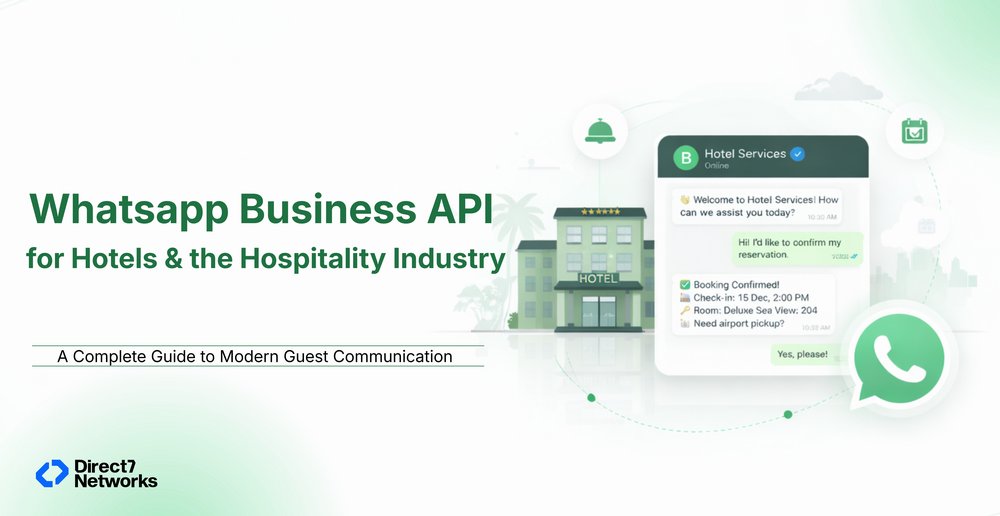

WhatsApp Business API for Hotels and the Hospitality Industry: A Complete Guide to Modern Guest Communication
A traveler lands late at night after a long international flight. Instead of calling the hotel front desk, they open WhatsApp and send a quick message:
"Hi, I’ll arrive around 2 AM. Can I still check in?"
Within seconds, the hotel responds with check-in instructions, a digital room confirmation, and directions to the property.
Later during the stay, the same guest uses WhatsApp to request extra towels, reserve a table at the hotel restaurant, and ask for airport transfer details.
No phone calls.
No waiting on hold.
No searching through emails.
For modern travelers, messaging has become the most natural way to communicate.
At the same time, hotels are managing hundreds, sometimes thousands of guest interactions every day. Front desks receive calls, emails, booking requests, service requests, and support inquiries across multiple channels.
This is where messaging platforms like WhatsApp Business API for hotels are transforming hospitality communication.
Instead of fragmented conversations across phone, email, and apps, hotels can manage guest communication in a single, scalable messaging environment.
This guide explores how WhatsApp Business API is reshaping hotel operations, guest communication, and the overall hospitality experience.
The Shift Toward Messaging in Hospitality
Hospitality has always been built around communication.
Guests ask questions, make requests, confirm bookings, and seek assistance throughout their stay.
Traditionally, hotels relied on:
- Phone calls
- Emails
- Front desk interactions
- Hotel apps
But traveler expectations have changed dramatically.
Today’s guests prefer fast, mobile-first communication.
Messaging platforms now dominate how people communicate in everyday life. Travelers message airlines, restaurants, taxi drivers, and accommodation providers the same way they message friends.
Why Messaging Is Becoming the Preferred Channel
Several trends are driving this shift.
1. Mobile-First Travelers
Travel planning and booking increasingly happen on smartphones.
Guests expect to:
- Ask questions instantly
- Receive confirmations quickly
- Manage reservations on mobile
Messaging naturally fits into this behavior.
2. Demand for Instant Responses
Travelers rarely want to wait on hold or send emails that take hours to receive a response.
Messaging offers:
- Quick responses
- Real-time communication
- Convenient interaction
3. Global Communication
Hotels often serve international travelers.Messaging apps remove barriers such as:
- Expensive international calls
- Time-zone differences
- Language barriers
Guests can simply send a message anytime.
4. Familiar Platforms
WhatsApp alone has more than 2 billion users globally.
For many travelers, it is already their most-used communication app.
Hotels adopting messaging platforms meet guests where they already are.
What Is WhatsApp Business API
The WhatsApp Business API is a messaging solution designed for medium and large businesses that need to communicate with customers at scale.
Unlike the basic WhatsApp Business App, the API allows hotels to integrate WhatsApp messaging directly into their operational systems. This enables automated communication, multi-agent support, and integration with hospitality software.
WhatsApp Business App vs WhatsApp Business API
| Feature | WhatsApp Business App | WhatsApp Business API |
|---|---|---|
| Designed for | Small businesses | Medium and large businesses |
| Multi-agent support | Limited | Yes |
| Automation | Basic | Advanced |
| CRM integration | No | Yes |
| Booking system integration | No | Yes |
| Chatbots | Limited | Full support |
For hotels handling high volumes of guest interactions, the API provides the scalability required for hospitality operations.
How WhatsApp Business API Works for Hotels
At a high level, the API connects WhatsApp messaging with hotel systems.
This can include:
- Property Management Systems (PMS)
- Booking engines
- Customer relationship management (CRM)
- Concierge platforms
- Automation tools
- Chatbot platforms
The result is a centralized hospitality messaging platform.
Hotels can:
- Send automated notifications
- Respond to guest inquiries
- Manage conversations with multiple agents
- Automate guest services
All within WhatsApp.
Key Use Cases of WhatsApp API in Hospitality
Hotels are using WhatsApp messaging across a wide range of operational scenarios.
Below are some of the most common and practical applications.
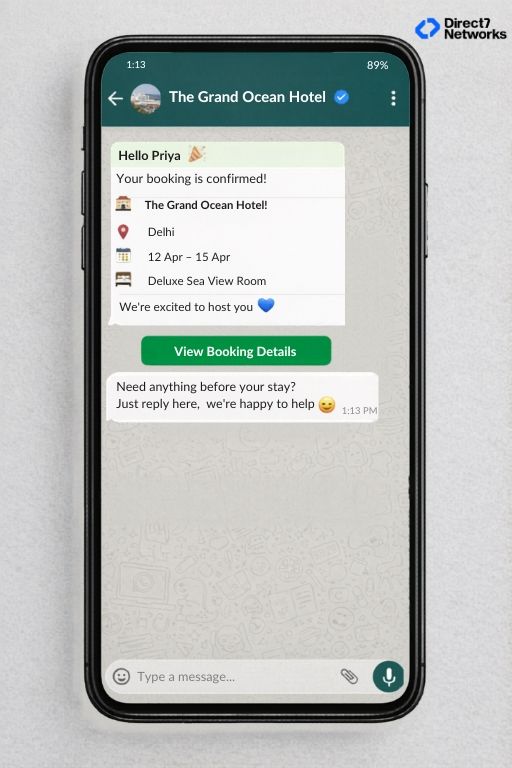
Booking Confirmations
When a guest books a room online, hotels can instantly send a WhatsApp confirmation.
The message may include:
- Booking details
- Check-in time
- Hotel address
- Support contact
- Reservation reference number
Guests receive the confirmation in the same app they use every day.
Reservation Updates
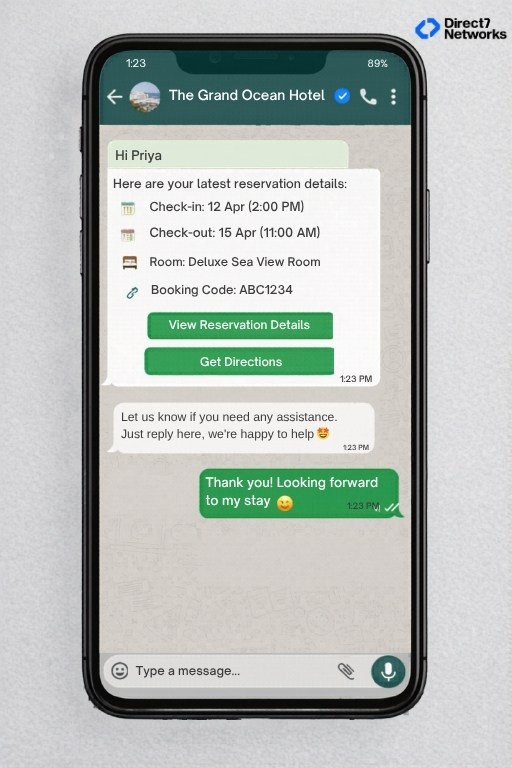
Travel plans change frequently.
Hotels can notify guests about:
- Reservation modifications
- Room upgrades
- Availability updates
- Booking reminders
Instead of sending emails that may go unnoticed, WhatsApp notifications are delivered directly to the guest’s messaging app.
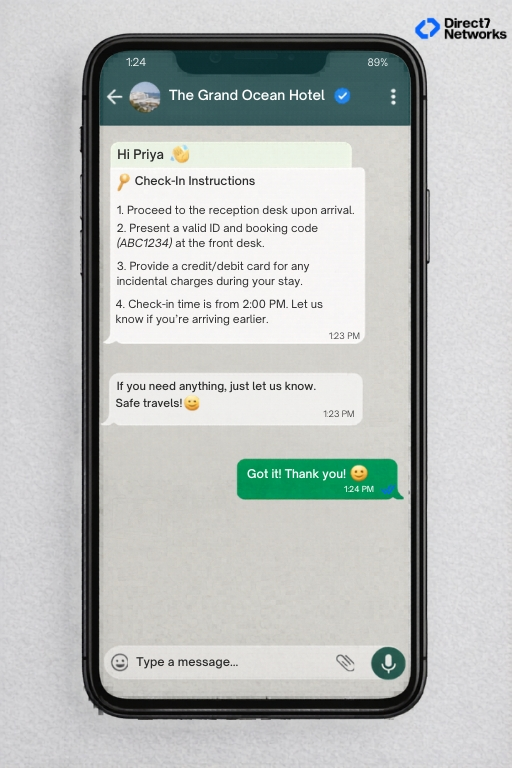
Check-In Instructions
Hotels increasingly use messaging to streamline check-in.
Before arrival, guests can receive messages containing:
- Digital check-in links
- ID verification instructions
- Directions to the hotel
- Parking details
This reduces front desk congestion and improves arrival experiences.
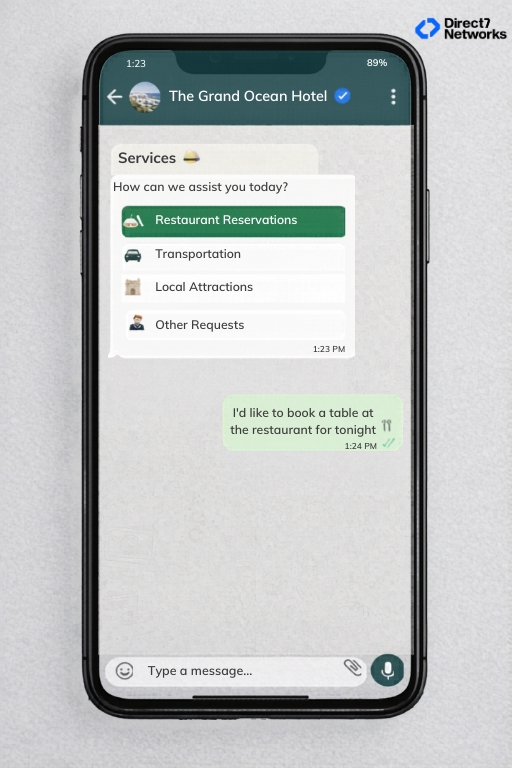
Concierge Services
Guests frequently ask for assistance with:
- Local attractions
- Transportation
- Restaurant reservations
- City recommendations
Hotels can provide concierge services directly through WhatsApp hotel communication.
Guests simply send a message instead of calling reception.
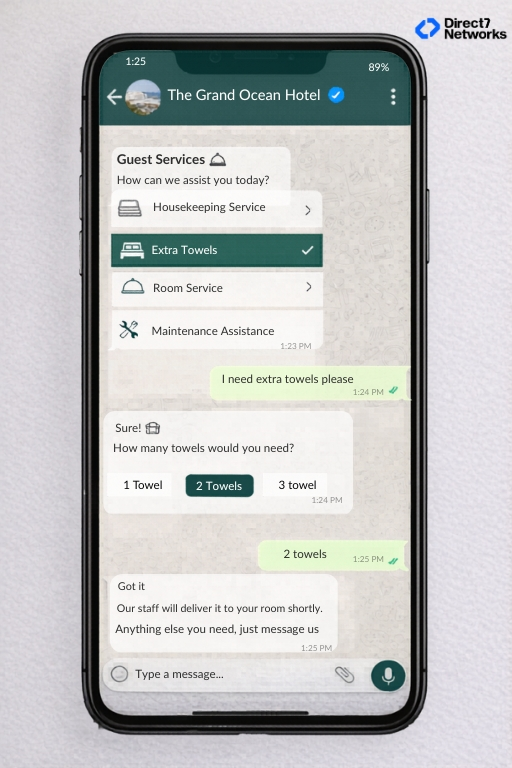
Room Service Requests
During the stay, guests often need quick assistance.
Through WhatsApp, they can request:
- Extra towels
- Housekeeping services
- Room service
- Maintenance assistance
Requests are instantly routed to hotel staff.
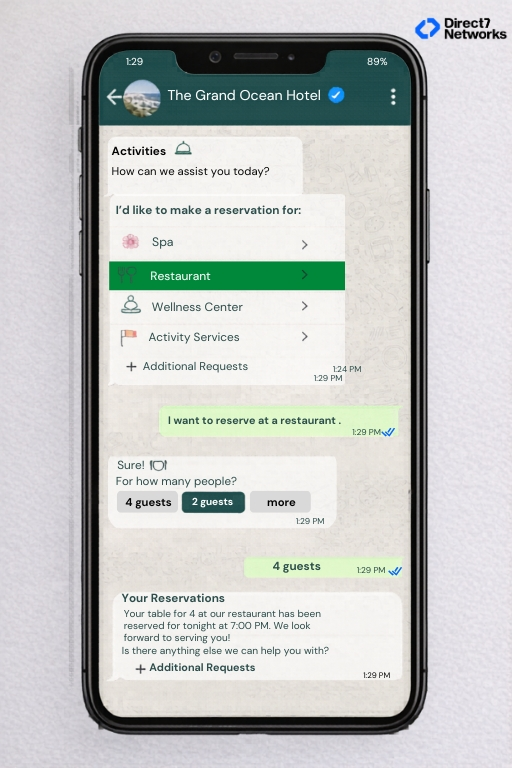
Spa and Restaurant Reservations
Many hotels operate:
- Spas
- Restaurants
- Wellness centers
- Activity services
Guests can reserve services directly through messaging, simplifying internal coordination.
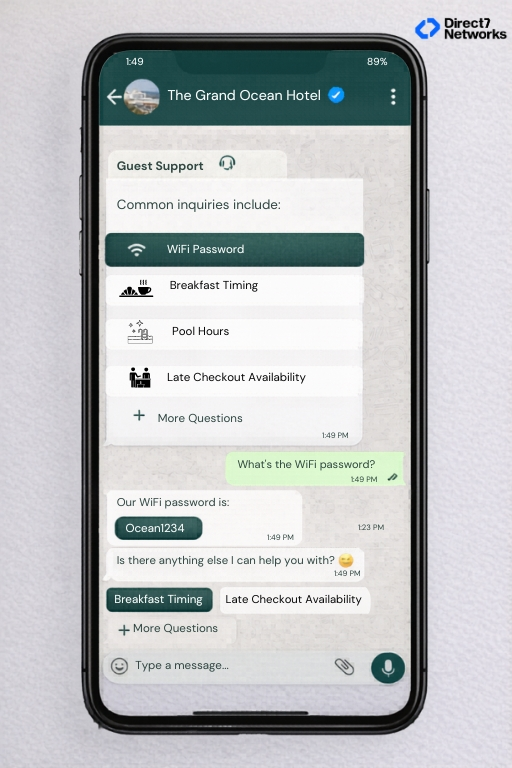
Guest Support
Hotels handle many guest questions daily.
Common inquiries include:
- WiFi password
- Breakfast timing
- Pool hours
- Late checkout availability
Messaging allows hotels to respond quickly and efficiently.
Guest Journey Messaging Framework
The most effective hospitality messaging strategies follow the guest journey.
Instead of isolated interactions, hotels can communicate with guests across the entire travel experience.
Pre-Arrival Communication
The guest journey begins before arrival.
Hotels can use messaging to prepare guests and improve anticipation.
Booking Confirmation
Immediately after booking, the guest receives confirmation through WhatsApp.
Pre-Check-In Instructions
A day before arrival, hotels can send:
- Check-in time reminders
- Digital forms
- Location details
Upselling Opportunities
Hotels may offer upgrades such as:
- Airport transfers
- Spa packages
- Room upgrades
- Dining experiences
Messaging provides a direct and convenient channel for upselling.
During-Stay Communication
Once guests arrive, messaging becomes a powerful service tool.
Guest Support
Guests can ask questions anytime without calling the front desk.
Concierge Assistance
Hotels can assist with:
- Travel recommendations
- Tour bookings
- Transportation
Service Requests
Housekeeping, maintenance, and room service requests can be handled through WhatsApp.
This reduces phone traffic at reception.
Post-Stay Engagement
Communication does not end at checkout.
Hotels can continue engagement after departure.
Feedback Collection
Hotels can request reviews through messaging.
This improves feedback response rates.
Loyalty Programs
Guests can receive updates about:
- Loyalty rewards
- Membership offers
- Exclusive promotions
Promotional Campaigns
Hotels may send seasonal offers or travel promotions.
Messaging helps maintain long-term guest relationships.
Automation and Chatbots for Hotels
As guest communication increases, automation becomes essential.
A WhatsApp chatbot for hotels can handle routine interactions automatically.
This reduces operational pressure on hotel staff.
Automating Frequently Asked Questions
Hotels often receive repetitive questions.
Examples include:
- What time is check-in?
- Is breakfast included?
- Do you provide airport transfers?
A chatbot can instantly answer these questions.
Handling Booking Inquiries
Potential guests frequently ask about:
- Room availability
- Pricing
- Amenities
A chatbot can collect basic information and guide guests toward booking.
Service Request Automation
Guests can request services through structured chatbot menus.
Example workflow:
- Guest opens WhatsApp chat
- Selects “Room Service”
- Chooses from available menu options
- Request is sent to hotel staff
Automation reduces manual coordination.
Notifications and Updates
Chatbots can automatically send:
- Reservation reminders
- Check-in instructions
- Stay updates
- Service confirmations
Hotels maintain consistent communication without overwhelming staff.
Benefits of WhatsApp Business API for Hotels
The growing adoption of WhatsApp for hospitality industry communication is driven by real operational benefits.
Improved Guest Experience
Messaging offers guests a convenient way to communicate.
Guests appreciate:
- Fast responses
- Easy access to support
- Simple service requests
This enhances the overall stay experience.
Faster Communication
Phone calls often create delays during busy periods.
Messaging allows hotels to respond quickly and manage multiple conversations simultaneously.
Reduced Front Desk Workload
Many routine inquiries can be handled through messaging and automation.
This allows front desk staff to focus on higher-value guest interactions.
Centralized Communication
Hotels can manage guest communication across multiple departments within a single platform.
Staff from:
- Reception
- Housekeeping
- Concierge
- Guest services
can collaborate on guest requests.
Increased Direct Bookings
Messaging simplifies guest inquiries.
When guests receive quick answers to questions, they are more likely to complete reservations directly.
Operational Efficiency
Automated messaging reduces repetitive manual tasks.
Hotels can manage communication at scale without increasing staffing requirements.
Implementing WhatsApp API in Hospitality
Adopting WhatsApp messaging requires a structured implementation approach.
Choosing a WhatsApp Business API Provider
Hotels cannot directly access the API without an approved provider.
A provider such as D7 Networks, a direct Meta business partner, can help hotels:
- Activate WhatsApp API
- Manage message templates
- Integrate systems
- Configure automation
Selecting an experienced provider simplifies the setup process.
Integration with Hotel Systems
To maximize value, WhatsApp should integrate with:
- Booking engines
- Property management systems
- CRM platforms
- Service management tools
Integration ensures that messages are triggered automatically.
Designing Messaging Workflows
Hotels should map the full guest journey and identify communication points.
Examples include:
- Booking confirmations
- Pre-arrival messages
- Service requests
- Post-stay feedback
These workflows form the foundation of hospitality messaging automation.
Setting Up Automation
Automation may include:
- Chatbots
- Notification triggers
- Service request routing
Hotels should start with simple workflows and gradually expand automation.
Challenges and Considerations
Like any digital transformation, messaging adoption requires thoughtful planning.
Message Template Approvals
WhatsApp requires businesses to use approved templates for certain outbound messages.
Hotels must submit templates for:
- Booking confirmations
- Reminders
- Promotional messages
Templates must follow WhatsApp policies.
Compliance and Privacy
Hotels must ensure that guest communication follows:
- Data privacy regulations
- Messaging consent requirements
- Opt-in policies
Proper consent management is essential.
Integration Complexity
Connecting messaging platforms with hotel systems may require technical support.
Working with experienced providers reduces implementation challenges.
Managing Guest Conversations
Hotels must establish clear processes for handling guest messages.
This may involve:
- Assigning conversations to departments
- Setting response time guidelines
- Monitoring service quality
Effective management ensures consistent guest experiences.
Future of Messaging in Hospitality
Messaging is becoming a central component of hospitality technology.
Several trends are shaping the future.
Conversational Guest Services
Guests increasingly expect conversational interactions rather than traditional service requests.
Messaging platforms enable natural, continuous conversations.
AI-Powered Concierge
Artificial intelligence will enhance messaging capabilities.
AI assistants may help guests with:
- Travel planning
- Activity recommendations
- Hotel services
Automated Guest Journeys
Hotels will automate entire communication flows.
Guests may receive:
- Personalized recommendations
- Automated service updates
- Tailored travel information
Messaging-First Hospitality Experiences
In the future, many hotel interactions may happen through messaging.
From booking to checkout, messaging platforms will connect guests with hotel services.
Conclusion
Hospitality has always relied on clear and timely communication.
As traveler expectations evolve, messaging platforms are becoming essential tools for hotels.
The WhatsApp Business API for hotels enables hospitality businesses to manage guest communication more efficiently while delivering faster and more personalized service.
Through automation, chatbots, and integrated messaging workflows, hotels can:
- Streamline guest interactions
- Reduce operational workload
- Improve guest satisfaction
For hospitality businesses seeking to modernize their communication strategy, messaging platforms offer a practical and scalable solution.
As the industry continues to embrace digital transformation, messaging will play an increasingly important role in shaping the future of guest experience.