
How WhatsApp API Messaging Helps in Retail Cloth Stores
A customer in Dubai sees your new Ramadan collection on Instagram. She taps the ad, opens WhatsApp, browses a few styles, asks about size availability and completes the purchase before your competitor even replies.
This is how modern fashion retail works now. Fast decisions. Short attention spans. High competition.
Retail clothing brands don’t just compete on design or pricing anymore. They compete on response time, convenience, and personalization. That’s where understanding how WhatsApp chatbot helps in retail clothing stores becomes a strategic advantage.
Why WhatsApp Fits Naturally Into Fashion Retail
Clothing purchases are interactive. Customers want size confirmation, style recommendations, stock availability, delivery timelines, and store locations.
A WhatsApp chatbot for retail delivers this instantly inside a familiar app. Instead of browsing passively, customers interact. That interaction drives higher conversion compared to static product pages.
Turning Daily Inquiries Into Automated Sales
Retail teams deal with repetitive questions daily:
- Do you have this in medium?
- Is this available in my country?
- What’s your return policy?
- Where is my order?
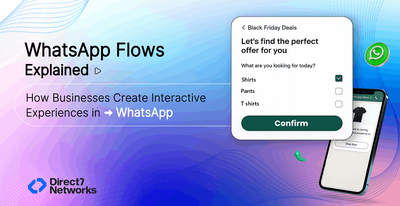
With the WhatsApp Business API for clothing stores, these queries become structured flows. Customers choose options like Shop Women, Shop Men, Track Order, Find a Store, or Current Offers. The chatbot instantly responds with product categories, pricing, and availability.
Click-to-WhatsApp Ads: From Ad Click to Purchase
Click-to-WhatsApp ads allow Instagram and Facebook ads to open a WhatsApp conversation directly.
Ad → WhatsApp opens → Chatbot greets → Products shown → Offer applied → Checkout link shared.
This reduces drop-offs and increases engagement while capturing leads directly inside chat.
Sending Promotional Messages to Existing Customers
Retaining customers is more profitable than acquiring new ones.
A WhatsApp API allows retailers to segment customers:
- Ethnic wear buyers receive festive previews.
- Inactive customers receive comeback discounts.
- High-value buyers receive early access invites.
- Region-specific customers receive localized offers.
Personalized messages improve open rates and conversion while reducing opt-outs.
Festive Greetings That Drive Sales
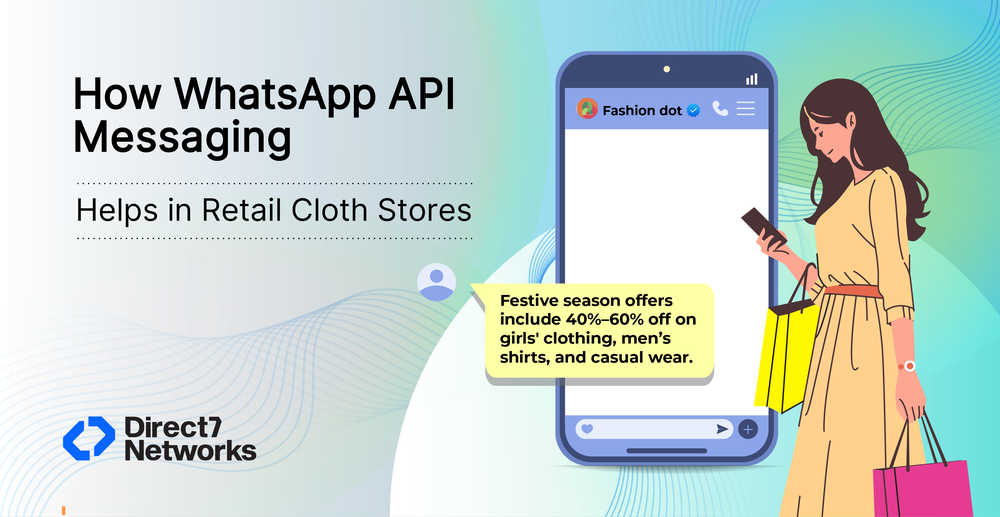
Fashion retail aligns with global celebrations like Ramadan, Christmas, Lunar New Year, Diwali, Black Friday, and back-to-school season.
A structured festive campaign includes:
- Warm greeting
- Relevant collection launch
- Limited-time offer
- Clear call-to-action button
Automation manages high traffic while store teams focus on in-person customers.
Abandoned Inquiry and Cart Recovery
Customers often browse but hesitate. A WhatsApp api can:
- Send reminder messages
- Offer small discounts
- Suggest alternatives
- Provide size assistance
This timing-based follow-up recovers lost sales.
WhatsApp Retail Sales Funnel
- Attract – Click-to-WhatsApp ads and QR codes
- Engage – Guided product discovery
- Assist – FAQs and size guidance
- Convert – Payment links or store visits
Retain – Post-purchase updates and seasonal previews
Retail clothing is competitive. Speed and relevance win. When conversation replaces friction, sales follow naturally.
Three Immediate Actions:
- Launch a Click-to-WhatsApp ad for your best-selling collection.
- Automate your top five repetitive customer questions.
- Send a segmented festive promotion instead of a generic broadcast.
Operational Impact Inside the Store
The benefits are not only customer-facing.
Store teams experience:
- Reduced repetitive questions
- Better inventory visibility
- Structured lead capture
- Measurable campaign performance
- Increased walk-in traffic from chat-driven ads
Instead of reacting to messages manually, teams operate with predictable flows.
That improves both efficiency and revenue.
Why This Matters Now
Retail clothing is highly competitive. Customers compare instantly and switch brands quickly.
Speed wins. Relevance wins. Simplicity wins.
Understanding how WhatsApp chatbot helps in retail cloth stores is not about adopting a new tool. It’s about aligning communication with how modern customers actually shop.
When conversation replaces friction, sales follow naturally.