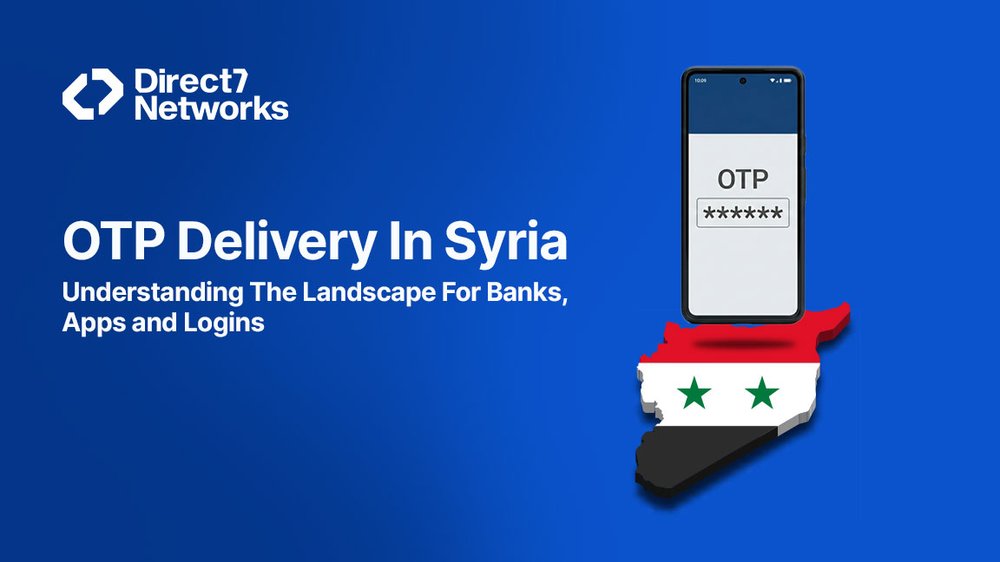

OTP Delivery in Syria: Understanding the Landscape for Banks, Apps, and Logins
For banks, fintech companies, e-commerce platforms, and even government services operating in Syria, a common and frustrating user complaint is the failure to receive One-Time Passwords (OTPs).
The experience is highly inconsistent: sometimes the message is instantaneous, other times it is significantly delayed, and occasionally, it never arrives at all. This unreliability leads to failed logins, abandoned signups, stuck transactions, and an overwhelmed support team.
Syria is among the world's most challenging markets for consistent OTP delivery. This difficulty isn't due to a lack of support for OTPs, but rather because the regulatory framework is stricter, message filtering is more aggressive, and routing protocols are more volatile than in most other regions.
Achieving reliable OTP delivery in this environment requires a deep understanding of local routing mechanisms and the specific expectations set by operators for message senders.
This article provides a straightforward explanation of these critical factors.
Why Syria Is Unique: How OTP Routing Behaves
OTP Delivery Challenges: Key Restrictions and Solutions
Syria's mobile networks employ rigorous filtering, strict content templates, and heavily controlled Sender ID rules, especially for international-origin messages. This distinct environment causes One-Time Passwords (OTPs) to behave differently than in other regions.
Five Critical Factors Impacting OTP Delivery:
- Sender ID Type: Alphanumeric Sender IDs need to be registered
- Content Filtering: Operators aggressively target text that appears promotional. OTP channels must be strictly transactional. Any content that resembles an offer, including branding, links, or marketing language, may be filtered.
- URL Blocking: In-message links, particularly shortened URLs, are widely considered unsafe and are usually blocked within OTP messages.
- International Traffic Monitoring: International routing is highly supervised and subject to frequent changes to combat fraud and spam, which can lead to temporary service instability.
- Traffic Volume and Time: High-volume traffic spikes, such as surges during peak evening login times, are more likely to be filtered.
These operational constraints are not public knowledge but are derived from the observed, real-world behaviour of Syrian mobile operators and data collected by SMS providers like D7 Networks across extensive OTP delivery volumes.
The Behind-the-Scenes Journey of an OTP
Delivering a One-Time Password (OTP) involves a multi-step pipeline:
- Request Initiation: Your application sends the initial verification request.
- Provider Handoff: The request is received by your SMS provider (e.g., D7 Networks).
- Optimal Routing: The provider identifies the most secure local network route for transmission.
- Operator Vetting: The mobile operator performs a rigorous check, analysing:
- Sender ID legitimacy and type.
- Adherence to the message template.
- Message length limitations.
- Presence of URLs or suspicious content.
5. Delivery or Filter:
6. Confirmation & Action:
Note: Every step in this process is critical, especially in complex regions like Syria.
Ensuring Reliable OTP Delivery in Syria: Best Practices
These guidelines are based on successful strategies employed by leading financial institutions, fintech companies, and government services using Syrian messaging routes.
Core Principles for Stable Delivery are as follows :
- Maintain Short and Uncluttered OTP Templates
Syria's filtering systems favour minimal, straightforward text.
Ideal Template: “Your login code is 483219”
Exclude: Branding, thank-you notes, support information, emojis, URLs, offers, or unusual formatting.
2. Eliminate All Links from OTP Messages
Any inclusion of a URL, even secure HTTPS or bank domains, increases the risk of blocking.
Rule: An OTP message must contain only the code. If a link is necessary, send it in a separate message following the verification process.
3. Implement a Safe Retry Pattern
Aggressive, rapid retries often trigger message filtering to manage traffic and monitoring
recommended flow:
- Initial attempt.
- Wait 60–90 seconds.
- Second attempt.
- If both fail, switch to an alternate channel (e.g., WhatsApp or voice call).
4. Keep OTP Volume Predictable
The Syrian network is sensitive to sudden, unannounced volume spikes.
Action: If a high-traffic event is anticipated (like a campaign or relaunch), notify your provider (e.g., D7) so they can manage the data flow to prevent it from appearing suspicious to operators.
5. Conduct Daily DLR (Delivery Receipt) Monitoring
Regularly analyse delivery data to identify issues and trigger necessary routing adjustments.
Key Indicators to Watch For:
- Drops occur at specific times of the day.
- Declines are unique to a particular operator.
- Recurring blocked message patterns.
Simplified Real-World OTP Use Cases
These examples are based on common, effective authentication flows used by Syrian businesses.
| Scenario | Trigger Event | Example Message | Key Rationale | Outcome/Benefit |
|---|---|---|---|---|
| 1. Banking Login Verification | User attempts to log in to the banking application. | “Your login code is 552144” | Uses a numeric sender ID, and the message is clean and simple (no links or branding). | Guarantees instant delivery, reducing "I didn't receive my OTP" support issues. |
| 2. High-Risk Transaction Confirmation | User initiates a financial operation (e.g., money transfer, bill payment). | “Your transaction code is 911243” | Syria prioritises numeric codes for high-risk security actions. | Significantly reduces the risk of fraud and lowers the support team workload. |
| 3. New User App Signup | A new customer completes the registration process. | “Your verification code is 663204” | Utilises a simple, single-purpose template for clarity. | Results in a higher rate of successful sign-up completions. |
| 4. New Device Alert & Authentication | A login is detected from an unrecognised device or geographical location. | “Your device code is 120439” | N/A | Enhances account security and builds user trust more quickly. |
Common Pitfalls Harming OTP Delivery in Syria
For immediate and improved delivery, strictly avoid these mistakes:
- Including Your Brand Name: Keep the message content strictly transactional.
- Adding a Link: URLs are highly discouraged.
- Mixing Languages or Adding Emojis: Use clear, consistent text.
- Sending Promotional Text: OTPs must be purely for verification.
- Sending Long Messages: Keep the message concise.
- Excessive Retries (3–5 attempts): Limit the number of resends.
Avoid these, and delivery improves instantly.
D7 Networks : Your Solution for Consistent Syrian Authentication
D7 is essential for applications and banks seeking reliable authentication in the sensitive Syrian market. Our Syria-optimised One-Time Password (OTP) routes ensure consistent performance by offering:
- Secure Sender IDs: Utilising safe numeric Sender IDs.
- Maximum Reliability: Featuring high-stability routing and real-time failover mechanisms.
- Transparency: Providing clean delivery reporting and template testing capabilities.
This helps apps and banks maintain consistent authentication in a market where routes are sensitive.
Conclusion: Navigating the Syrian OTP Market
The Syrian market is among the strictest for One-Time Passwords (OTPs), but successful delivery is achievable by adhering to clear, predictable rules:
Key Strategies for Stable OTP Delivery:
- Sender ID: Always utilise numeric sender IDs.
- Keep the OTP text concise and minimal.
- Links: Strictly avoid including any links within the OTP message.
- Retries: Limit the number of retry attempts.
- Monitoring: Consistently monitor and analyse delivery patterns.
The path to stable delivery involves starting with a single, clean OTP template, thorough testing, and maintaining predictable routing. By designing your OTP messages in line with Syrian operators' expectations, you can ensure reliable service.