
SMS During Natural Disasters: Building Fast, Reliable Alert Systems When It Matters Most
When heavy rains turn into flash floods or an earthquake hits without warning, people don’t open apps or browse websites, they reach for their phones. In those moments, speed and reliability decide whether a message saves lives or arrives too late.
That’s where SMS stands apart. It doesn’t rely on internet connectivity, works on basic phones, and cuts through noise with a simple, direct message. For governments, telecom operators, and businesses involved in emergency response, getting SMS communication right is not just a technical task, it’s a responsibility.
Why SMS Still Leads in Emergency Communication
During natural disasters, networks get congested, power outages are common, and internet access becomes unreliable. Messaging apps may fail or deliver messages late.
SMS, however, works independently of internet-based systems and continues to function even in low-connectivity environments, making it a critical communication channel during crises. As highlighted in this detailed guide on SMS in disaster management, its ability to deliver messages instantly and reliably makes it indispensable when every second counts.
This makes SMS ideal for:
- SMS flood alerts in vulnerable regions
- Earthquake SMS warning systems where seconds matter
- Cyclone alert message systems for early evacuation
What Makes an Effective Disaster SMS System
Sending messages is easy. Delivering the right message, at the right time, to the right people, that’s where most systems fail.
Geo-Targeting That Actually Works
A cyclone alert message system should not notify an entire country when only coastal districts are at risk. Precision reduces panic and improves response.
Modern SMS platforms allows:
- Location-based targeting
- Language customization by region
- Tiered alerts based on risk levels
Speed Over Perfection
In emergencies, delays cost lives. SMS systems must prioritize speed through automation. Platforms built for scale, such as enterprise-grade SMS solutions and APIs, ensure high-throughput delivery even during peak network congestion.
Message Clarity Under Stress
People don’t process complex instructions during crises.
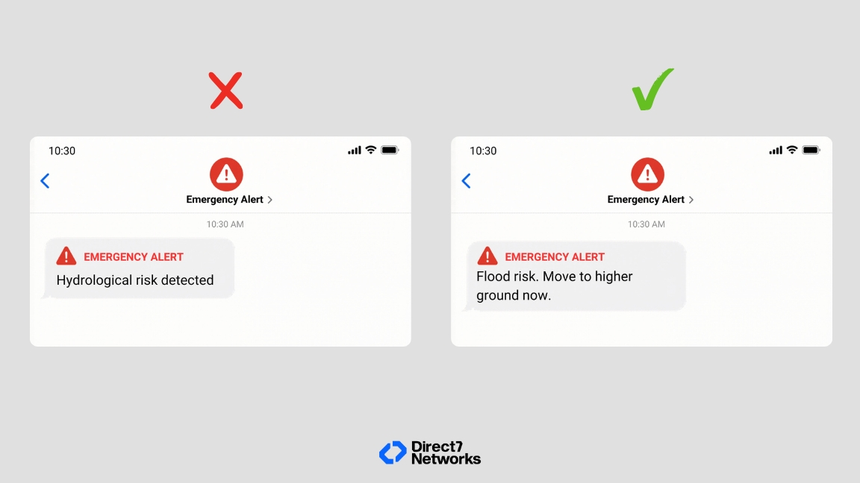
Simple messages drive faster action.
Types of SMS Alerts Used in Natural Disasters
Different disasters demand different messaging approaches.
Flood Alerts
Flood scenarios evolve quickly. SMS flood alerts are used for:
- Early warnings
- Rising water level updates
- Evacuation instructions
Earthquake SMS Warning
Earthquakes offer little warning, but even seconds matter.
An earthquake SMS warning can:
- Prompt immediate safety actions
- Trigger automated shutdown systems
- Reduce panic through instant guidance
Cyclone Alert Message Systems
Cyclones allow phased communication:
- Early advisory
- Preparedness alert
- Emergency evacuation message
SMS ensures consistent communication across all phases.
Real-World Lessons from Disaster Communication
Across disaster-prone regions, a few patterns consistently emerge:
- Communication systems must work without internet dependency
- Messages must reach all device types, including basic phones
- Delivery must be fast and verifiable
In real-world implementations, organizations using SMS-based systems were able to deliver alerts within minutes and significantly reduce coordination delays during disasters.
A Practical Framework for Disaster SMS Alerts
The “3S” Model - Speed, Specificity, Simplicity
Speed
- Automate alerts using real-time triggers
- Avoid manual approvals
Specificity
- Target affected regions only
- Include clear instructions
Simplicity
- Use short, direct sentences
- Focus on one action per message
Message Templates That Actually Work
Pre-approved templates reduce response time during emergencies.
Flood Alert
“Flood warning in [Area]. Water levels rising. Move to higher ground immediately.”
Earthquake Warning
“Earthquake detected. Take cover now. Stay away from windows.”
Cyclone Alert
“Cyclone expected in [Area] within 24 hrs. Prepare for evacuation.”
Integrating SMS into a Larger Emergency System
SMS works best when combined with other channels:
- Mobile alerts
- Sirens and public announcements
- Emergency apps
Still, SMS often acts as the backbone, the most reliable layer when others fail.
Operational Challenges Teams Should Plan For
Network Congestion
Large-scale disasters can overload networks. Systems must support high-volume delivery.
Data Accuracy
Outdated contact databases reduce effectiveness.
Regulatory Compliance
Emergency messaging must follow regional telecom regulations.
Where Businesses Fit Into This
While governments lead disaster communication, businesses play a crucial role in enabling it.
Messaging providers help by offering:
- Scalable infrastructure
- API-driven automation
- Reliable global delivery
In many cases, platforms like Direct7 Networks support disaster communication by ensuring messages reach affected populations quickly and consistently, even in challenging network conditions.
The Human Side of Emergency Messaging
At its core, disaster communication is about trust. People act on messages they understand, recognize, and believe. A clear SMS at the right time can guide someone to safety, reduce panic, and save lives.
Final Takeaway
SMS remains one of the most dependable tools during natural disasters because it works when other systems fail. Its effectiveness depends on how well it’s implemented, with speed, precision, and clarity.
If there’s one thing to get right, this make messages simple, timely, and actionable.