
Customer Engagement: Strategies, Lifecycle, and How WhatsApp API Enhances It
A customer browses your website at lunch, asks a question on chat in the evening, and expects an update on their order the next morning. To them, it’s one continuous experience. To most businesses, it’s still fragmented.
That gap between how customers behave and how businesses respond is where customer engagement either succeeds or fails.
What is customer engagement?
Customer engagement is the quality of interactions a business has with its customers across every touchpoint before, during, and after a purchase.
It’s not just about sending messages or responding to queries. It’s about relevance, timing, and consistency. A well-engaged customer feels understood, valued, and connected to your brand.
Think of it less as communication, and more as a relationship that evolves with every interaction.
Customer engagement across the customer lifecycle
Customers don’t just “buy”, they move through stages. Engagement looks different at each step.
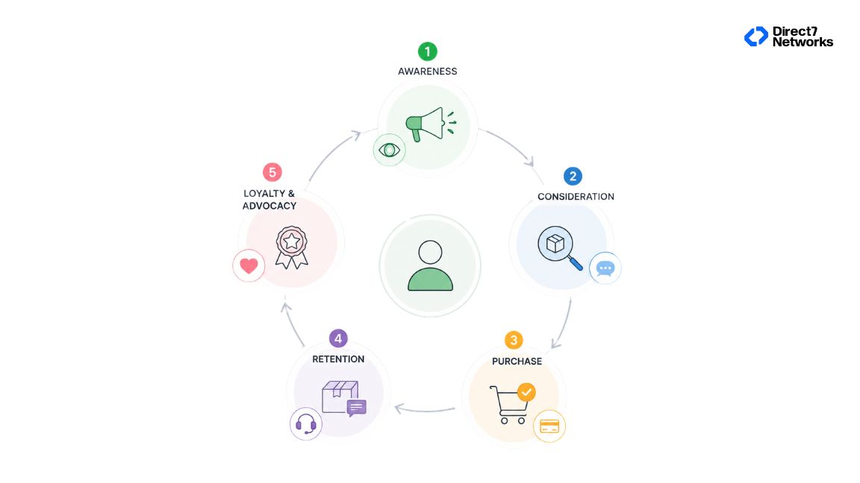
1. Awareness
At this stage, customers are discovering you. Engagement is about visibility and clarity.
Example: Social ads, blog content, or WhatsApp click-to-chat campaigns.
2. Consideration
Customers compare options and seek information.
Example: Quick responses to product queries, demos, or FAQs via chatbot.
3. Purchase
The decision point. Friction here can cost conversions.
Example: Instant checkout assistance or order confirmation messages.
4. Retention
The real growth driver. Keeping customers engaged post-purchase matters more than acquisition.
Example: Delivery updates, support, feedback requests.
5. Loyalty & Advocacy
Satisfied customers become repeat buyers and promoters.
Example: Loyalty rewards, exclusive offers, referral programs.
Strong engagement means you don’t drop the conversation between stages.
Why customer engagement is important
Engagement directly impacts business outcomes:
- Higher conversion rates: Timely responses reduce drop-offs
- Better retention: Customers stay when interactions feel easy and personal
- Increased lifetime value: Engaged customers spend more over time
- Stronger brand perception: Consistent experiences build trust
A common mistake is focusing only on acquisition. In reality, growth comes from improving engagement after the first interaction.
Customer engagement strategies (with real use cases)
1. Personalized communication
Customers expect messages that feel relevant, not mass broadcasts.
What it looks like:
- Using customer name, preferences, or past behavior
- Sending tailored offers based on browsing or purchase history
Use case:
An e-commerce brand sends a WhatsApp message:
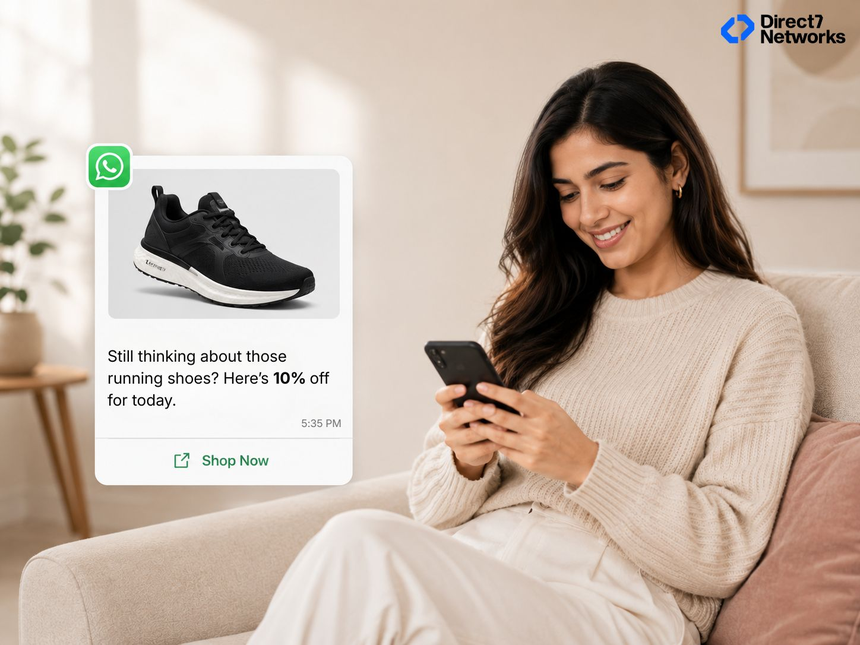
Framework: Personalization Layer
- Data → Insight → Action
- (Collect behavior → Understand intent → Send relevant message)
2. Omnichannel engagement
Customers switch between channels email, SMS, chat, apps without thinking about it.
Your job is to keep the experience consistent.
What it looks like:
- Starting a conversation on ads → continuing on WhatsApp → resolving on chat
- Unified customer data across channels
Use case:
A customer clicks a Facebook ad, lands on WhatsApp, asks a question, and completes the purchase all in one flow.
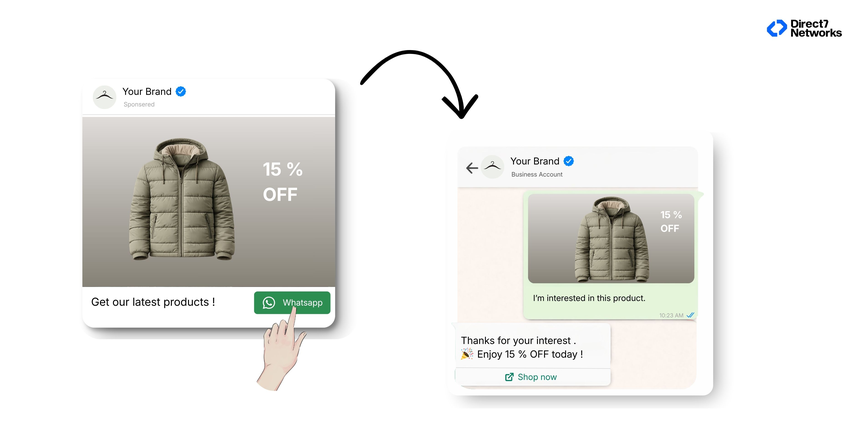
Template: Omnichannel Flow
- Entry point (Ad / Website)
- Conversation channel (WhatsApp / Chat)
- Support or conversion
- Follow-up (email/SMS/WhatsApp)
3. Interactive experiences
Engagement improves when customers can do something, not just read.
What it looks like:
- Quick reply buttons
- Product catalogs
- Chat-based navigation
Use case:
A travel company uses a WhatsApp chatbot:
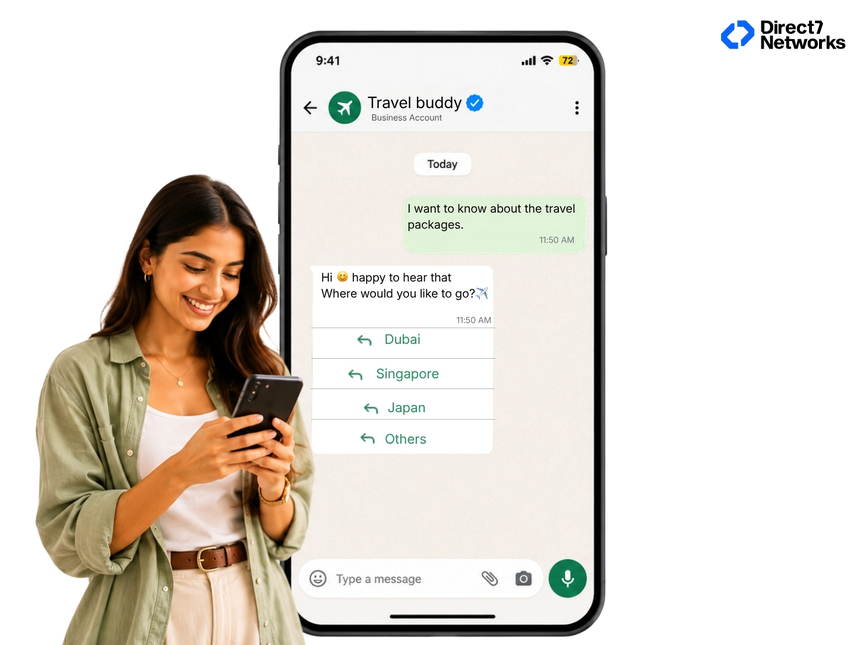
Customers explore options without leaving the chat.
Framework: Interaction Loop
Prompt → Response → Next step → Outcome
4. Loyalty programs
Retention becomes easier when customers feel rewarded.
What it looks like:
- Points-based systems
- Exclusive deals
- Early access offers
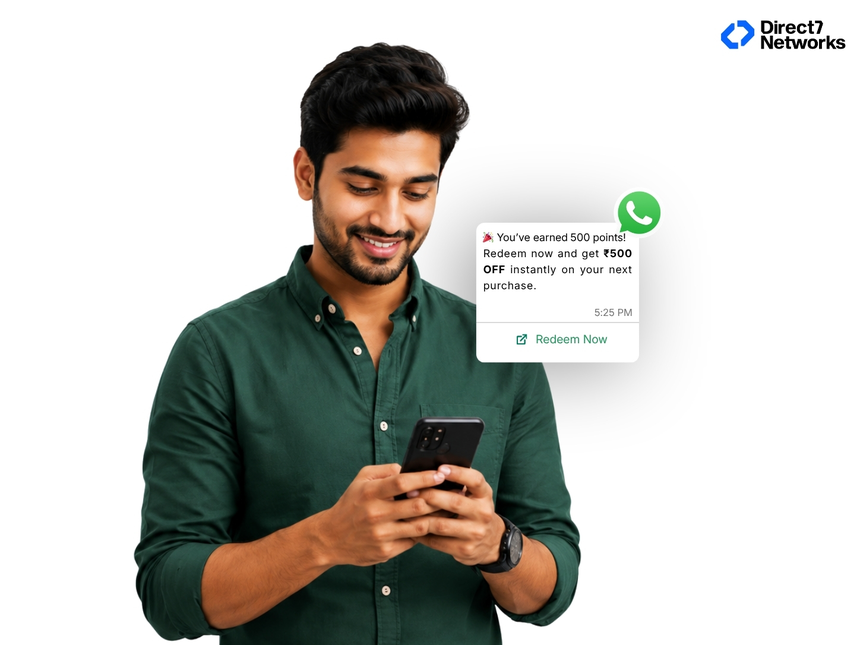
Use case:
A retail brand sends:
Benefits of customer engagement strategies
When done right, these strategies create measurable impact:
- Reduced support load through automation
- Faster response times across channels
- Improved customer satisfaction (CSAT)
- Higher repeat purchase rates
- Better data for decision-making
The key isn’t using more tools, it’s connecting them in a meaningful way.
How WhatsApp API helps in the customer engagement process
Messaging has become the most natural way customers interact with businesses. The WhatsApp Business Platform stands out because it combines scale, personalization, and automation.
1. Customer care and chatbots
Customers expect quick answers, often instantly.
With WhatsApp API:
- Chatbots handle FAQs 24/7
- Complex queries can be routed to human agents
- Conversations feel natural and continuous
Example:
A telecom company resolves billing queries instantly via chatbot, reducing call center volume.
Businesses working with providers like Direct7 Networks often integrate chatbots with CRMs, so every conversation updates customer records in real time.
2. Marketing messages
WhatsApp allows opt-in, high-engagement messaging.
What it enables:
- Product promotions
- Abandoned cart reminders
- Campaign broadcasts
Example:
“Flash sale starts now. Tap to shop.”
Click → Catalog → Purchase
Compared to traditional channels, these messages often see significantly higher open rates because users actively check them.
3. Notification and authentication messages
These are critical for trust and experience.
Use cases:
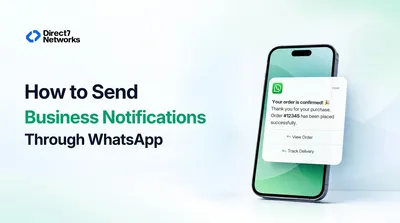
- Order confirmations
- Delivery updates
- OTP verification
Example:
“Your order has been shipped. Track here.”
This reduces customer anxiety and support queries.
Get started with the WhatsApp Business Platform
Getting started doesn’t require a complex overhaul, but it does require a clear approach.
Basic setup flow:
- Choose a WhatsApp Business Solution Provider
- Verify your business
- Set up messaging templates (approved by WhatsApp)
- Integrate with your CRM or backend systems
- Launch with a use case (support, marketing, or notifications)
Start small, focus on one high-impact area like customer support or order updates, then expand.
Conclusion
Customer engagement isn’t about being everywhere, it’s about being relevant wherever your customer is. Businesses that treat engagement as a continuous conversation, not a one-time interaction build stronger relationships and more predictable growth. If your current experience feels fragmented, start by fixing one stage in the lifecycle. That’s usually enough to unlock momentum.