
FTEU SMS: How Free-To-End-User Shortcode Messaging Works and Why Businesses Use It
Imagine watching a live talent show where the host says:
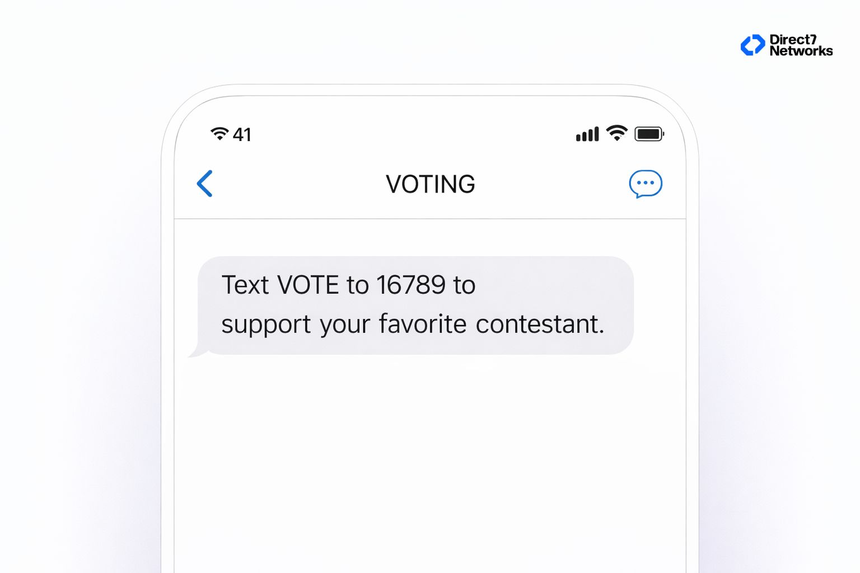
“Text VOTE to 54321 to support your favorite contestant.”
Within seconds, thousands of viewers send messages. Large TV campaigns can receive millions of votes within minutes, turning SMS into a real-time audience engagement tool.
But participation depends on one critical detail: cost.
If viewers must pay to send a message even a small fee many hesitate. The same
problem appears in other business scenarios:
- A retail brand asking customers to text for a discount
- A charity requesting support through SMS
- A bank collecting customer feedback
- A delivery company running satisfaction surveys
Even small messaging charges create friction.
That’s why many organizations use FTEU SMS (Free To End User SMS). In this model, customers can send or receive messages without paying, while the business covers the messaging cost.
For companies running SMS shortcode campaigns, removing the user cost can dramatically increase engagement.
FTEU SMS: How Free-To-End-User Shortcode Messaging Works for Secure Customer Engagement
Picture a customer signing up for a new app.
Moments after entering their phone number, they receive a verification message asking them to confirm their registration. They reply with a code or keyword, and within seconds their account is activated.
From the customer’s perspective, the process is simple and instant. More importantly,they are not charged for the SMS interaction.
Behind this seamless experience is a messaging model called FTEU SMS (Free-To-End-User SMS).
What Is FTEU SMS?
FTEU SMS (Free-To-End-User SMS) is a messaging model where customers can send or receive SMS messages without being charged by their mobile carrier. The organization running the campaign pays the messaging costs instead.
This model typically runs on SMS shortcodes, which are 5–6 digit phone numbers designed for high-volume business messaging.
In practice, the user experience looks like this:
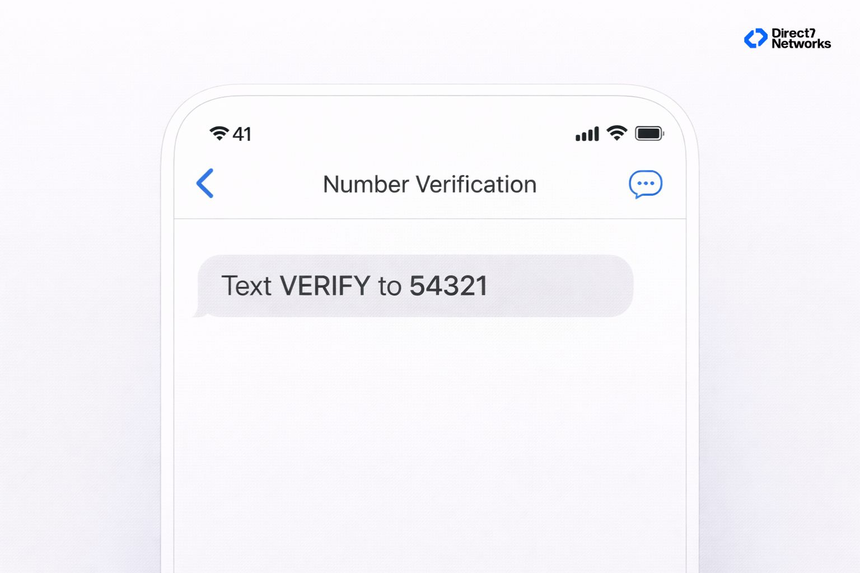
The customer sends the message, receives a response, and completes the interaction without paying for the SMS.
For businesses, this model removes a common barrier to participation and enables smoother communication with customers.
Why Businesses Use FTEU Shortcode SMS
Many enterprise messaging workflows require customers to respond quickly.If customers must pay to send messages, response rates can drop dramatically.
FTEU messaging solves this by making SMS interactions completely free for the user, encouraging immediate participation.
Organizations commonly use FTEU shortcode messaging for:
- Account verification
- Alerts and notifications
- Public service announcements
- Customer engagement campaigns
The result is faster responses and improved customer experience.
Key Business Use Cases for FTEU SMS
Number Verification and OTP Delivery
One of the most common uses of FTEU messaging is phone number verification.
Applications often send one-time passwords (OTP) or verification codes to confirm a user's identity.
Because the message is free, users can respond quickly without worrying about SMS charges.
This makes FTEU messaging ideal for:
- Account registration
- Two-factor authentication
- Login verification
These workflows improve both security and user onboarding experience.
Marketing Campaigns
Retail brands frequently use SMS for promotional campaigns.
Example:
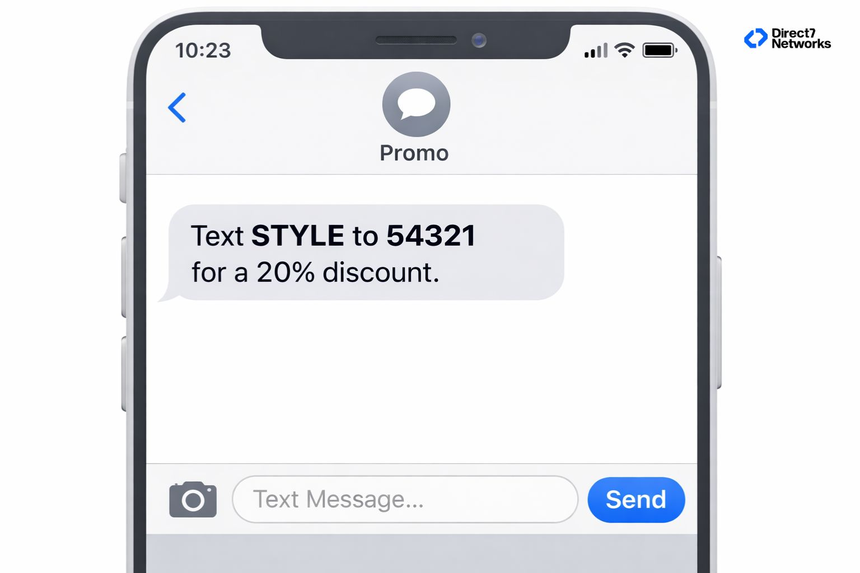
Because the message is free, customers are more likely to participate.
TV Voting and Audience Participation
Reality shows and live broadcasts rely heavily on SMS voting.Since millions of viewers may participate simultaneously, shortcodes combined with FTEU messaging enable large-scale engagement.
Customer Feedback Programs
Businesses frequently collect customer feedback through SMS.
Example:
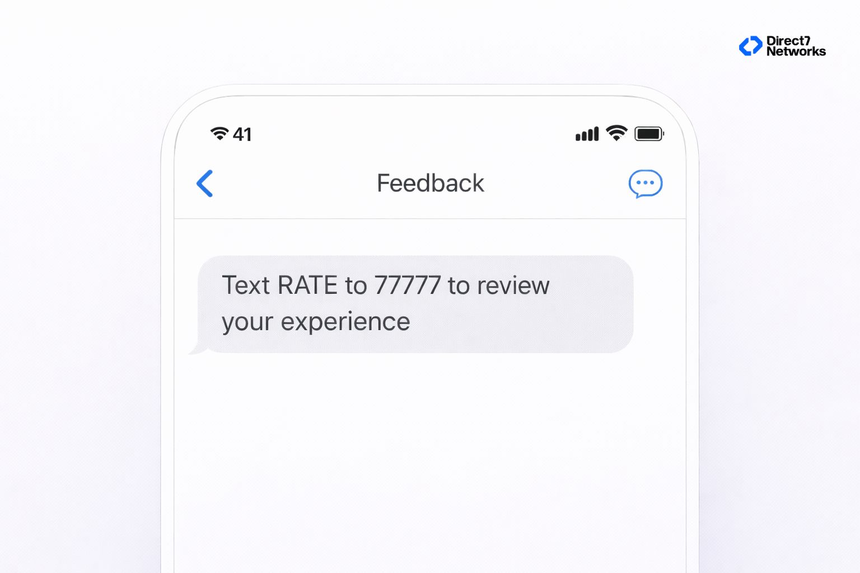
Because messaging is free, response rates are typically much higher.
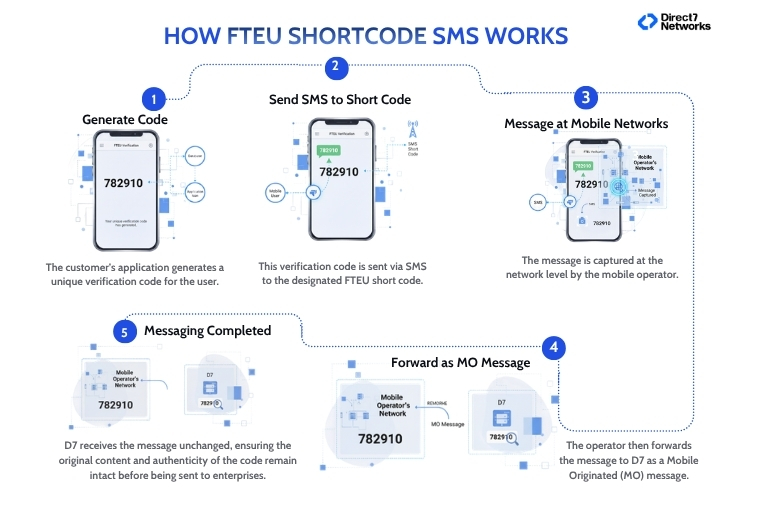
How FTEU Shortcode SMS Works
Although the process feels simple to the customer, several telecom systems work together to complete the interaction.
Below is a typical FTEU SMS workflow.
1. Application Generates a Verification Code
The business application first generates a unique code for the user.
This code may be used for:
- Account verification
- Registration confirmation
- Security authentication
2. SMS Is Sent to the Shortcode
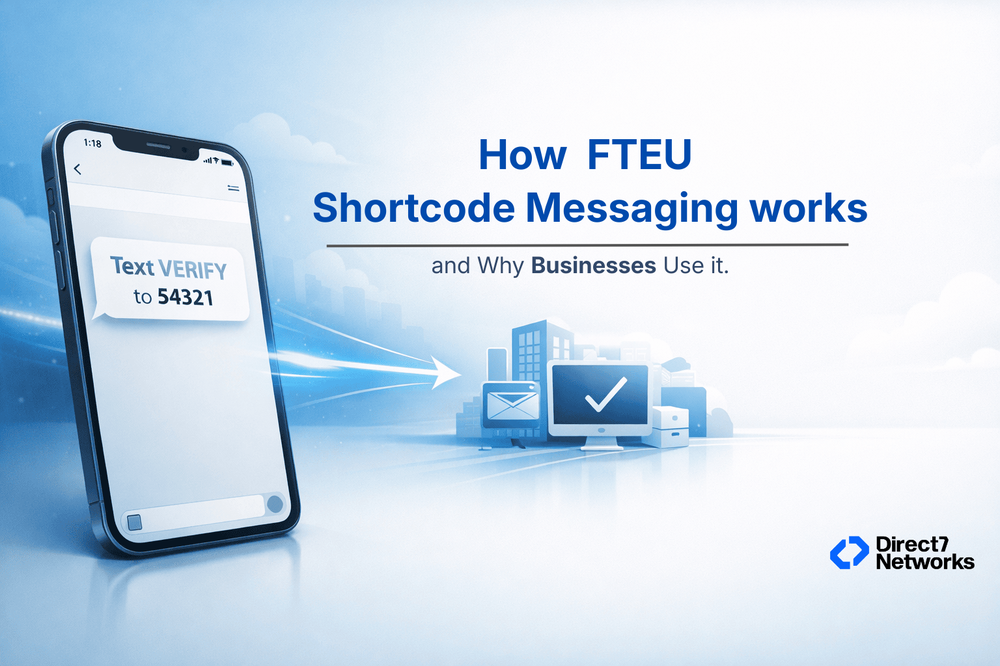
- The code or keyword is sent via SMS to a designated FTEU shortcode.
- Example:
- User sends: VERIFY
- to shortcode: 54321
3. Mobile Network Captures the Message
- The customer’s mobile operator receives the message at the network level and identifies it as part of a registered FTEU campaign.
- Because the campaign is configured as free-to-end-user, the carrier does not charge the user.
4. Message Is Forwarded as an MO Message
The mobile operator forwards the message as a Mobile Originated (MO) message to the messaging provider.
MO messages represent messages sent from the user to the platform.
5. Messaging Platform Processes the Interaction
The SMS platform receives the message and processes the content.
The system may:
- Validate verification codes
- Trigger automated responses
- Confirm registrations
- Store user responses
The message is delivered to the enterprise system unchanged, ensuring the authenticity and integrity of the data.
Benefits of FTEU Messaging for Enterprises
For organizations managing large customer bases, FTEU messaging offers several advantages.
Improved Customer Experience
Free messaging removes cost concerns for users, creating a smoother interaction experience.
Higher Engagement Rates
Customers are more likely to respond to SMS messages when they know the interaction is free.
Better Security Workflows
FTEU messaging supports secure verification processes such as OTP authentication and account confirmation.
Faster Customer Interactions
SMS remains one of the fastest communication channels, with most messages read within minutes.
This makes it ideal for real-time engagement.
Scalable Messaging Infrastructure
Shortcodes allow businesses to manage high volumes of messages simultaneously, making them ideal for large enterprises.
FTEU vs Premium SMS vs Standard SMS Vs Toll Free SMS
| Messaging Type | Who Pays | Number Type | Typical Use Case | User Cost | Campaign Scale |
|---|---|---|---|---|---|
| Standard SMS | User | Regular mobile number | Person-to-person texting, basic notifications | Standard SMS charge based on carrier plan | Low to moderate |
| Premium SMS | User (higher rate) | Shortcode | Paid services, contests, voting, content subscriptions | Higher per-message fee | High |
| FTEU SMS | Business | Shortcode | Marketing campaigns, audience voting, surveys, customer engagement | Free for the user | Very high throughput |
| Toll-Free SMS | Usually business (user cost depends on plan) | 10-digit toll-free number (e.g., 800, 888) | Customer support, service inquiries, conversational messaging | May be free or counted against texting plan | Moderate |
Best Practices for Running FTEU SMS Campaigns
Organizations deploying FTEU messaging should follow a few essential guidelines.
Use Clear Messaging
Customers should understand exactly what action they need to take.
Example:
Reply VERIFY to confirm your phone number
Ensure Customer Consent
Always obtain user consent before sending messages to comply with telecom regulations.
Provide Opt-Out Options
Customers should be able to unsubscribe easily by replying with keywords such as STOP.
Monitor Messaging Performance
Track metrics such as:
- Delivery rates
- Response rates
- Engagement levels
Analytics helps optimize messaging workflows.
Why FTEU SMS Is Growing in Enterprise Messaging
Modern businesses rely on messaging for everything from security verification to customer engagement.But if customers must pay for messages, participation becomes unpredictable.
FTEU SMS solves that problem by ensuring customers can interact without any messaging charges.By combining shortcodes, two-way messaging, and enterprise SMS platforms, businesses can create secure and scalable communication workflows.
For organizations focused on improving customer experience and engagement, free-to-end-user messaging remains one of the most effective ways to interact with customers through SMS.