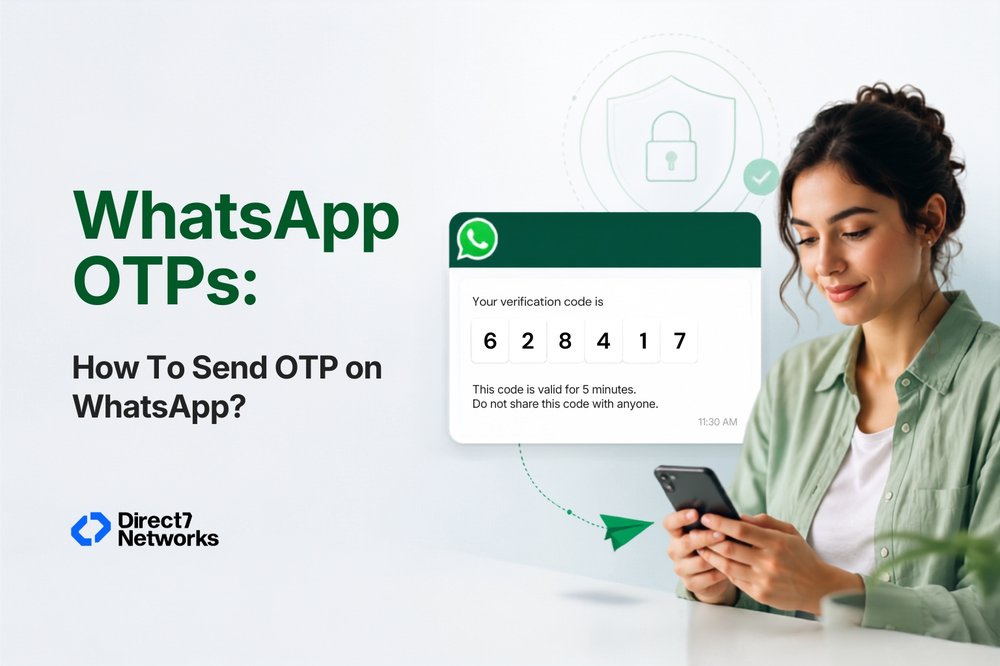

WhatsApp OTPs: How To Send OTP on WhatsApp?
Discover how WhatsApp OTPs boost security and engagement with encrypted, fast, and reliable authentication. Learn the key benefits, use cases, and how to send OTPs via WhatsApp.
Passwords alone no longer provide enough protection against modern account takeover attacks. Businesses today must balance strong authentication with a seamless user experience, especially during login, registration, password resets, and payment verification. Customers expect verification to be fast, reliable, and convenient.
While SMS remains the most widely used OTP delivery channel, WhatsApp has emerged as an effective complementary authentication channel. Its global adoption, encrypted messaging, and rich customer experience make it well suited for delivering one-time passwords, particularly when businesses want an additional communication option.
This guide explains how WhatsApp OTP authentication works, how it compares with SMS OTP, where it fits into a multi-channel authentication strategy, and the implementation practices businesses should follow to improve both security and user experience.
What is WhatsApp OTP code?
WhatsApp OTPs are a great way to perform two-factor verification. They are a simple way to confirm a user's identification when they perform important actions such as logging into email or completing transactions. WhatsApp adds an extra layer of security to traditional channels. Features such as its end-to-end encryption, high delivery rate, and cost-effectiveness ensure a safe experience.
You can send an OTP via WhatsApp if you want to check your balance online or place an online order. It will protect your data against hackers and other cyber threats.
The app is easy to use. WhatsApp sends a code to users instead of requiring them to go through complicated verification steps. What is the best thing? WhatsApp OTPs are free for users. Businesses pay for messages, but not users.
How WhatsApp OTP Authentication Works
WhatsApp OTP authentication follows a simple but secure workflow that verifies a user's identity before granting access to an account or approving a sensitive action.
Typical Authentication Flow
- The user initiates a login, registration, or transaction.
- Your backend generates a time-limited one-time password (OTP).
- The authentication service sends the OTP through the WhatsApp Business API.
- WhatsApp delivers the encrypted OTP message to the user's device.
- The user enters the OTP.
- Your backend validates the code.
- Authentication succeeds if the OTP is correct and still valid.
What is the difference between SMS OTP and WhatsApp
In the world, 93% of businesses use SMS OTP for verification. With such wide adoption, you might think the only difference between SMS OTPs and WhatsApp OTPs would be the medium of transmission. It's not just about the medium. Let’s compare the two:
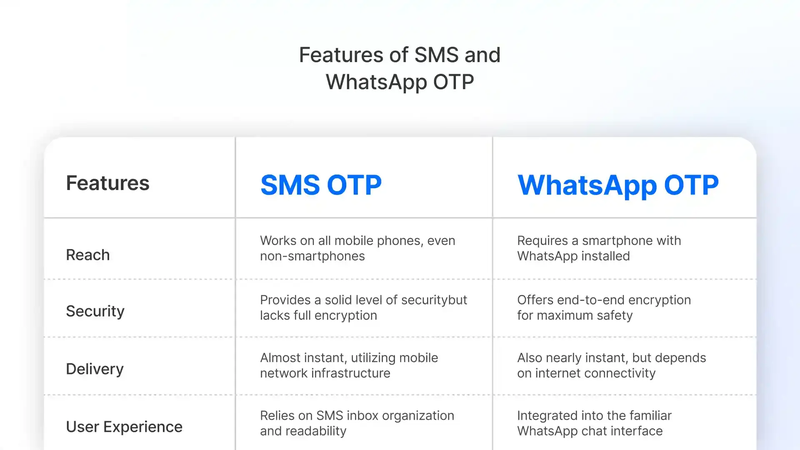
Understanding the differences between OTPs will allow you to choose one that meets your and your customers' requirements.
WhatsApp OTPs: Benefits
WhatsApp can send you one-time codes to improve the security of your transaction. These are the advantages of using WhatsApp OTPs.
Global Reach
WhatsApp boasts more than two billion active users. The platform's global reach allows customers and businesses to communicate without geographical boundaries.
Higher engagement rates
WhatsApp's engagement metrics are impressive. According to research, 80% of WhatsApp messages are read in the first five minutes. This rate is higher than the open rates for SMS and email, which means that users are more likely to read WhatsApp messages quickly.
Enhance Security
Sensitive information such as OTPs is prioritized. WhatsApp sends OTP-encrypted messages from end to end to guarantee their safety during transit. The only device that can decrypt OTPs is the one intended for the recipient, reducing the chance of the messages being intercepted. WhatsApp is safer because it doesn't use encryption.
High delivery rates
WhatsApp delivers messages reliably via internet connectivity, such as Wi-Fi or cellular data. This can be used to avoid SMS issues such as delays or non-delivery, particularly in areas with weak network coverage.
User Convenience
WhatsApp makes OTPs simple to use. The same app can be used to send and receive OTPs, streamlining the authentication process.
Cost-Effectiveness
WhatsApp can save businesses money. WhatsApp messages are read at a higher rate than emails or SMS, 98%. It encourages users to respond quicker, leading to smoother transactions.
Trust Increased
The combination of convenience and safety builds trust between companies and their customers. Customers will be more loyal to brands that prioritize security and provide an easy authentication method, which can have a positive effect on a business's reputation.
WhatsApp as an SMS Backup
WhatsApp is an excellent backup option for businesses that rely on SMS to send OTPs. It is used in the event of a system malfunction that prevents OTPs from being sent via SMS. WhatsApp ensures users receive authentication messages without any issues and increases efficiency.
Explore the benefits of WhatsApp OTP authentication. Schedule a demo with us today!
Best Practices for Implementing WhatsApp OTP
Deploying WhatsApp OTP successfully requires more than simply sending verification codes. Authentication systems should balance security, reliability, and usability.
Use Short OTP Expiry Times
Keep OTP validity between 30 and 120 seconds to reduce replay risks.
Limit Verification Attempts
Restrict repeated OTP submissions to prevent brute-force attacks.
Validate OTPs on the Server
Generate and verify OTPs exclusively on backend systems.
Monitor Delivery Performance
Track successful deliveries, failures, and authentication completion rates to identify operational issues.
Configure SMS as a Fallback
If WhatsApp delivery fails, automatically switch to SMS to minimize authentication interruptions.
Follow Meta Template Requirements
Authentication templates should remain concise, compliant, and easy to understand.
Use Cases of OTP on WhatsApp
WhatsApp's ability to send one-time code opens up new possibilities for users and businesses. Here are a few examples of how WhatsApp OTPs can improve various processes.
User Registration
The OTP for WhatsApp simplifies registration. Signing up is much easier with the user's OTP. This allows the user to verify their OTP in the app they use to communicate. The result is a better user experience and a higher completion percentage. WhatsApp's enhanced security makes the verification process secure.
Password Reset
WhatsApp OTP simplifies the process of resetting lost passwords. When users request to reset their account passwords, an OTP is sent to them. The user can quickly reset their password and gain immediate access to their account. This time-saving feature allows users to return to their work quickly.
Transaction Verification
Financial transactions are extremely sensitive. Sending OTPs via WhatsApp increases security by requiring users to confirm their payment with a code. This helps to prevent unauthorized transactions, giving businesses and clients peace of mind.
Account Recovery
The solution to the account loss problem is as simple as sending an OTP via WhatsApp. Businesses can verify users' identities by sending an OTP to their registered number, which prevents unauthorized access to data.
Appointment Confirmation
Businesses like salons and clinics will reduce the number of no-shows by using WhatsApp OTP to confirm appointments. Customers receive a unique code that helps them to remember their appointments and organize their schedules.
Subscription Confirmation
Users can sign up for a website by sending a code through WhatsApp. This simple step will ensure that subscribers receive only the content they desire while minimizing unwanted emails.
Delivery Confirmation
WhatsApp OTPs are a great way for e-commerce businesses to improve delivery. This method allows companies to track the package and ensure it reaches its recipient safely.
Access Control
Companies can use WhatsApp OTPs to manage restricted areas. Employees and guests are able to be given codes that allow them access to restricted areas.
Event Ticketing
Organizers can send OTPs to attendees as digital tickets. This will make it more difficult for people to fabricate tickets and allow real attendees to enter more easily.
Identity Verification for Customer Support
Businesses can ask customers to send them the WhatsApp OTP code if they need assistance verifying their identity. It ensures that only those who require sensitive information can access it.
Employee Onboarding
Before they can access company systems, they will receive an OTP from WhatsApp. It is crucial to protect sensitive information.
Document Access
It is easy to send an OTP via WhatsApp to ensure that only authorized personnel have access to documents. This protects sensitive data.
Account Deactivation
A company can send an OTP to the customer to deactivate an account. This affects both online services and retail stores. It prevents unauthorized users from closing their accounts and increases security.
Banking Login Verification
Banks use WhatsApp OTPs to verify customer logins before granting access to online banking portals.
Digital Wallet Authentication
Wallet providers authenticate high-value transfers using WhatsApp-delivered verification codes.
Marketplace Seller Verification
Marketplaces verify seller identities during onboarding and account recovery.
Employee VPN Authentication
Organizations deliver OTPs through WhatsApp to secure remote employee access.
Healthcare Portal Access
Hospitals verify patients before allowing access to medical records or appointment information.
High-Value Purchase Confirmation
Retailers authenticate expensive purchases to reduce payment fraud.
Is WhatsApp OTP Right for Your Authentication Strategy?
Before adopting WhatsApp OTP, evaluate whether it aligns with your customers, security requirements, and authentication workflows.
- Do most of your customers actively use WhatsApp?
If WhatsApp adoption is high in your target market, it can improve authentication completion rates.
- Is SMS delivery unreliable in some regions?
WhatsApp can provide a valuable alternative where SMS experiences frequent delays or delivery failures.
- Do you want branded authentication?
Businesses using verified WhatsApp Business accounts can create a more recognizable authentication experience.
- Do you require a fallback authentication channel?
Combining SMS and WhatsApp improves authentication reliability during temporary network or carrier issues.
- Are your users located across multiple countries?
Regional messaging performance varies. A multi-channel authentication strategy provides greater flexibility.
- Is authentication central to customer onboarding?
Fast and convenient verification reduces registration abandonment and improves the overall onboarding experience.
Common WhatsApp OTP Implementation Mistakes
Many authentication failures stem from implementation decisions rather than the messaging channel itself.
Using Long OTP Validity Periods
Long-lived OTPs increase exposure to unauthorized use. Keep expiration windows short.
Missing SMS Fallback
Internet connectivity issues may prevent WhatsApp delivery. SMS fallback improves authentication reliability.
Unlimited Retry Attempts
Restrict OTP generation and verification attempts to reduce automated attacks.
Ignoring Delivery Monitoring
Track delivery failures and authentication success rates to detect operational issues early.
Poor Template Management
Authentication templates should remain clear, concise, and compliant with Meta's policies.
Storing OTPs Insecurely
Store OTPs securely using appropriate hashing or encrypted storage and remove them after expiration.
Conclusion:
WhatsApp OTP has become an effective authentication channel for businesses seeking stronger security and a smoother customer experience. Combined with SMS, it helps organizations build resilient multi-channel authentication systems that improve verification success while maintaining convenience.
Successful implementation depends on more than sending verification codes. Short OTP validity periods, secure backend validation, delivery monitoring, rate limiting, and SMS fallback all contribute to a reliable authentication process.
Businesses implementing WhatsApp Business API can further strengthen authentication workflows by integrating delivery analytics, template management, and operational monitoring into their verification infrastructure. When deployed correctly, WhatsApp OTP improves security, customer trust, and authentication efficiency without increasing unnecessary friction.
Don’t Compromise on Security. Schedule a demo with us today!