
10 Mobile Marketing Campaign Examples That Actually Worked in 2026
Most mobile marketing advice focuses on channels. The most successful campaigns focus on customer behavior.
Brands like Amazon, Starbucks, Uber, IKEA, and Nike didn't succeed simply because they used mobile apps, SMS, or push notifications. Their campaigns worked because they delivered the right message at the right moment and made it easy for customers to take action.
This guide explores 10 mobile marketing campaigns that generated real engagement and highlights the lessons marketers can apply to improve their own mobile marketing strategies.
What Makes a Mobile Marketing Campaign Successful?
Not every mobile campaign delivers results. The most effective campaigns typically share a few common characteristics.
Relevance
Customers respond when messages align with their immediate needs, interests, or circumstances.
Timing
A perfectly timed notification often outperforms a highly creative campaign delivered at the wrong moment.
Personalization
Customers are more likely to engage when content reflects their preferences, purchase history, or behavior.
Simplicity
The best mobile campaigns reduce friction. Customers should immediately understand the value and next step.
Mobile-First Experience
Campaigns perform better when landing pages, checkout flows, and user journeys are designed specifically for mobile devices.
Customer Context
Successful campaigns consider where customers are, what they are doing, and what problem they are trying to solve.
Industry Insight
Mobile campaigns often fail because they interrupt customers instead of helping them complete an action they already want to take.
Personalization only improves results when the content is genuinely useful. More data does not automatically create better campaigns.
Location-based campaigns generate stronger engagement when the offer is immediately relevant to a customer's surroundings.
Push notifications perform best when triggered by customer actions rather than arbitrary marketing schedules.
Loyalty programs remain effective because they create repeat engagement rather than one-time interactions.
Mobile Marketing Campaign Examples
Several mobile marketing campaign types exist, each offering unique ways to connect with the target audience. Some common types include:
- App Marketing: Promoting a mobile app through app stores or other channels.
- Mobile advertising: displaying mobile advertisements on platforms such as social media or search engines.
- Push notification: Sending time alert to users' mobile devices.
- SMS Marketing: Using text messages to communicate with customers.
- Location-based marketing: targeting users based on their geographical location.
- In-app marketing: Advertising or promotion within a mobile game or app.
- QR Code: Encouraging users to scan the code for discounts or information.
- Promotional reality: Creating immersive experience through AR technology.
- Social media marketing: To take advantage of platforms such as Instagram or WhatsApp business.
- Email Marketing: Sending personal emails to users' mobile devices.
Mobile Marketing vs. Traditional Marketing
While traditional marketing methods such as TV advertisements or hoardings are still relevant, mobile marketing provides many benefits:
- Individualization: Mobile marketing campaigns can suit individual preferences.
- Real-time engagement: Business can interact immediately with users.
- Cost-effectiveness: Mobile advertisements are often more cheaper than traditional marketing.
- Measurement: Digital marketing equipment provides detailed analysis for marketing campaigns.
For example, Burger King used location-based mobile marketing to run foot traffic at store, demonstrating the power of mobile marketing strategies.
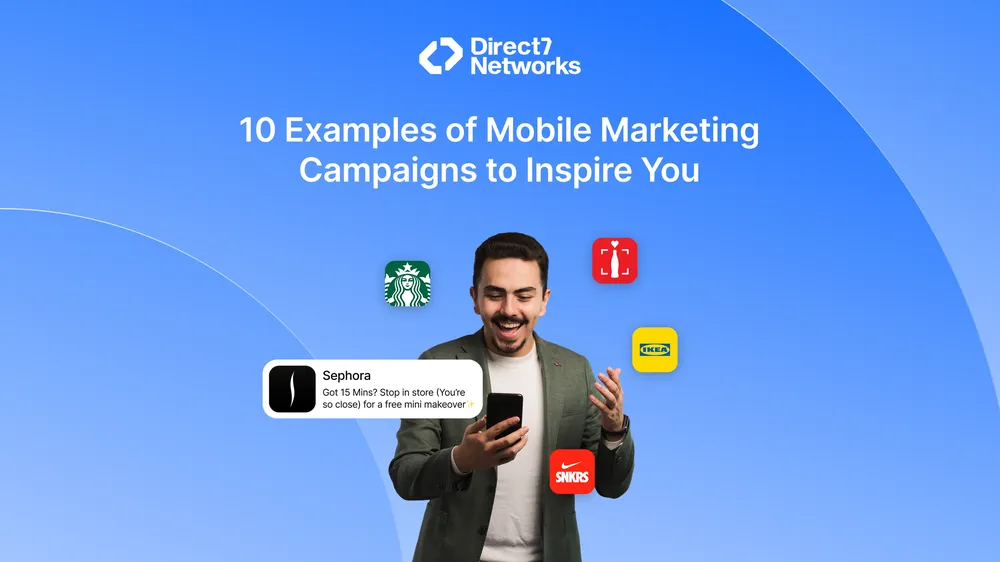
10 Examples of Mobile Marketing Campaigns to Inspire You
Here are 10 mobile marketing examples that demonstrate the effectiveness of mobile marketing campaigns:
Burger King’s “Burn That Ad"
- Used augmented reality to engage customers.
- Encouraged users to “burn” competitors’ mobile ads using the app for a free Whopper.
Campaign Objective: Increase app downloads, customer engagement, and store visits by using augmented reality to reward users with a free Whopper.
Why It Worked: It transformed a competitor's advertisement into a fun, interactive experience that encouraged participation and social sharing.
Key Takeaway: Gamified, technology-driven experiences with clear customer rewards can significantly boost engagement and brand recall.
Nike’s SNKRS App
- Leveraged push notifications to alert customers about limited-edition sneakers.
- Integrated augmented reality for exclusive product drops.
Campaign Objective: Drive app engagement and boost sales by notifying users about exclusive, limited-edition sneaker releases through personalized push notifications and augmented reality experiences.
Why It Worked: It combined urgency, exclusivity, and immersive AR experiences to create excitement and encourage immediate purchases.
Key Takeaway: Personalized mobile experiences and exclusive access can strengthen customer loyalty and drive high conversion rates.
Coca-Cola’s Mobile Advertising Campaign
- Used location-based marketing to promote seasonal drinks.
- Implemented QR codes on bottles for interactive experiences.
Campaign Objective: Increase brand engagement by delivering personalized, interactive mobile advertisements that encouraged consumers to connect with the Coca-Cola brand.
Why It Worked: It combined engaging mobile content with personalized experiences, making the campaign memorable and highly shareable.
Key Takeaway: Interactive and personalized mobile advertising helps brands build stronger customer engagement and improve campaign effectiveness.
Sephora’s Mobile App & Loyalty Programs
- Personalized product recommendations.
- Integrated rewards programs for higher customer engagement.
Campaign Objective: Enhance customer loyalty and increase purchases by offering personalized shopping experiences and rewards through its mobile app.
Why It Worked: It combined tailored product recommendations, loyalty rewards, and convenient shopping features to keep customers engaged and returning.
Key Takeaway: A mobile app that delivers personalization and meaningful rewards can significantly improve customer retention and lifetime value.
Amazon’s App Store & Cart Abandonment Strategy
- Sent push notifications to reduce cart abandonment.
- Enhanced mobile shopping experience through personalized recommendations.
Campaign Objective: Increase conversions by reminding customers about abandoned carts and making it easy to complete purchases through the mobile app.
Why It Worked: Timely, personalized reminders and a seamless checkout experience encouraged users to return and finish their purchases.
Key Takeaway: Personalized cart recovery strategies and frictionless mobile experiences can significantly reduce cart abandonment and boost sales.
Starbucks’ Mobile App & Rewards Program
- Combined mobile payments with customer rewards programs.
- Provided real-time push notifications for promotions.
Campaign Objective: Increase repeat purchases and customer loyalty.
Why It Worked: The rewards program created a clear incentive for customers to use the app regularly while simplifying payments.
Key Takeaway: Loyalty programs perform best when rewards are easy to understand and easy to redeem.
McDonald’s Super Bowl Mobile Marketing Campaign
- Used SMS marketing and mobile ads to boost engagement.
- Incorporated voice search for interactive participation.
Campaign Objective: Increase customer engagement and brand awareness during the Super Bowl through SMS marketing, mobile ads, and interactive voice search.
Why It Worked: It combined real-time engagement with interactive mobile experiences, encouraging customers to participate while watching the event.
Key Takeaway: Integrating multiple mobile channels with live events creates memorable customer experiences and drives higher engagement.
Spotify’s Personalized Playlists & Mobile Ads
- Leveraged in-app marketing to suggest playlists based on user behavior.
- Used mobile ads to promote its premium subscription.
Campaign Objective: Increase user engagement and premium subscriptions through personalized playlists and targeted mobile advertising.
Why It Worked: It delivered highly relevant content based on user listening habits while promoting premium features at the right moments.
Key Takeaway: Personalization combined with targeted mobile marketing enhances user engagement, loyalty, and conversion rates.
Domino’s AnyWare Ordering System
- Allowed customers to order via various mobile channels, including WhatsApp Business.
- Enhanced customer journey with voice search technology.
Campaign Objective: Simplify the ordering process by enabling customers to place orders through multiple mobile channels, including WhatsApp, voice assistants, and other digital platforms.
Why It Worked: It offered convenience and flexibility by allowing customers to order through their preferred mobile channel with minimal effort.
Key Takeaway: Providing seamless, omnichannel mobile experiences improves customer satisfaction and increases sales.
IKEA’s Augmented Reality Shopping Experience
- Integrated AR to let users visualize furniture in their homes.
- Improved mobile marketing strategy through interactive engagement.
Campaign Objective: Enhance the shopping experience by allowing customers to visualize IKEA furniture in their homes using augmented reality through the mobile app.
Why It Worked: It reduced purchase uncertainty by helping customers see how products would fit and look in their own spaces before buying.
Key Takeaway: Augmented reality creates immersive shopping experiences that increase customer confidence and drive purchase decisions.
How to Scale Your Mobile Marketing Campaigns Using Automation: A Step-by-Step Guide
- Define your goals: Identify the objectives of your mobile marketing campaign.
- Choose the right tool: Use an automation platform to manage push notifications, SMS marketing, and email marketing.
- Segment your audience: User tails your marketing campaigns based on behavior and preferences.
- Monitor Performance: Track the major matrix to customize your mobile marketing strategies.
- Iterate and improvement: Constantly refine your digital marketing strategy for better results.
Common Mobile Marketing Mistakes
Overusing Push Notifications
Excessive notifications often lead users to disable alerts or uninstall apps.
Poor Audience Segmentation
Sending identical messages to all users reduces relevance and engagement.
Irrelevant Personalization
Customers notice personalization that feels forced or inaccurate.
Excessive Message Frequency
More messages do not always create better results. Relevance matters more than volume.
Ignoring the Post-Click Experience
Even strong campaigns fail when landing pages are slow or difficult to navigate on mobile devices.
Mobile Marketing Channel Comparison
| Channel | Best For | Strength | Limitation |
|---|---|---|---|
| SMS | Alerts, promotions, OTPs | High visibility | Limited message length |
| Push Notifications | App engagement | Immediate delivery | Requires app installation |
| Customer communication | Conversational experience | Template requirements | |
| Detailed content | Rich formatting | Lower immediate visibility | |
| In-App Messaging | User guidance | Contextual communication | Requires active app usage |
Different channels serve different stages of the customer journey. The strongest mobile marketing strategies combine multiple communication channels rather than relying on a single platform.
Expanded Automation
Automation helps businesses deliver relevant communication at scale.
Common automated workflows include:
- Welcome sequences for new users
- Abandoned cart reminders
- Loyalty program updates
- Order and delivery notifications
- Re-engagement campaigns
- Appointment reminders
Businesses often combine SMS, WhatsApp, push notifications, and email to create coordinated customer journeys. Platforms such as D7 Networks help businesses automate messaging across multiple communication channels while maintaining consistency and delivery visibility.
Conclusion
The most successful mobile marketing campaigns share a common trait: they deliver relevant experiences at the right moment. Whether through SMS, push notifications, mobile apps, loyalty programs, or location-based marketing, the goal remains the same—making customer interactions more useful and more convenient.
The examples in this guide show that successful mobile marketing is not about using every available channel. It is about understanding customer behavior and selecting the right channel for each stage of the journey.
As businesses scale their mobile marketing efforts, automation and multi-channel communication become increasingly important. Solutions such as SMS, WhatsApp, push notifications, and messaging APIs help create connected customer experiences, while providers like D7 Networks support the communication infrastructure behind those interactions.