
The Full-Funnel WhatsApp Playbook for Festival Sales
Learn how to use WhatsApp marketing for festival season, from click-to-WhatsApp ads and chatbots to abandoned cart recovery and post-purchase retention.
Picture this: It is three weeks before the biggest festival of the year. Your warehouse is stocked, your website looks beautiful, and your ad accounts are fired up. But when launch day arrives, your emails get buried under a mountain of competitor promotions. Your social media ads cost twice as much as they did last month, and your support team is drowning in identical customer queries about delivery dates.
Every business faces this exact bottleneck during peak holiday windows. Festival seasons offer the highest-intent buying moments of the year, but they also bring brutal competition. Inboxes clutter, ad fatigue sets in, and overwhelmed shoppers walk away from carts simply because choosing a gift feels like hard work.
To break through this noise, you have to meet customers where they already spend their time. For millions of shoppers, that place is WhatsApp. WhatsApp marketing for festival season has evolved past simple text updates; it is now a full-funnel sales engine that guides a customer from initial discovery to final checkout, all within a single, familiar chat window.
Attract: Generate Leads Before the Festival Rush Begins
The biggest mistake businesses make is waiting until the festival week to turn on WhatsApp. By that point, you're competing for attention with every other brand simultaneously. The smarter move is to build your audience 3–4 weeks before the season starts.
Use Click-to-WhatsApp Ads to Capture Intent Early
Click-to-WhatsApp ads (Meta ads that open directly in a WhatsApp chat) are one of the cleanest lead generation tools available right now. A shopper sees your festive offer on Instagram or Facebook, taps the ad, and lands in a conversation with your business, without ever filling out a form or visiting a website. The friction is almost zero.
What makes these powerful during pre-festival periods is intent capture. Someone clicking a "Diwali Gift Sets" ad at the start of October is actively thinking about gifting. That's the moment to start a conversation, not a week before the holiday when they've already made their decisions.
Use WhatsApp Flows to Qualify and Personalise from the First Message
WhatsApp Flows let you build interactive forms inside the chat window itself. A customer who clicks your ad can select their city, choose a budget range, specify whether they're shopping for themselves or gifting, all without leaving WhatsApp. By the time they finish, your system has enough data to send them tailored recommendations.
For D2C brands running API-based messaging through providers like D7 Networks, this kind of structured intake can be fully automated and integrated with your CRM or product catalog, so personalisation happens at scale, not manually.
Convert: Turn WhatsApp Conversations into Sales
Once you have an audience, the quality of your messaging decides whether they buy from you or your competitor.
Segment and Personalise
Generic broadcast messages during festival season get ignored or, worse, marked as spam. What actually converts is relevance. A customer who bought from your kids' clothing range last Eid should receive a message about your new kids' collection, not a generic "Festival Sale, 30% off everything."
Segment your list by purchase history, location, browsing behaviour, and stated preferences (collected through Flows). Then build separate message templates for each group. A personalised WhatsApp message that says "Hi Priya, your Diwali kurta is back in stock in your size" will always outperform a mass broadcast every time, without exception.
Let a Chatbot Handle the Decision Fatigue
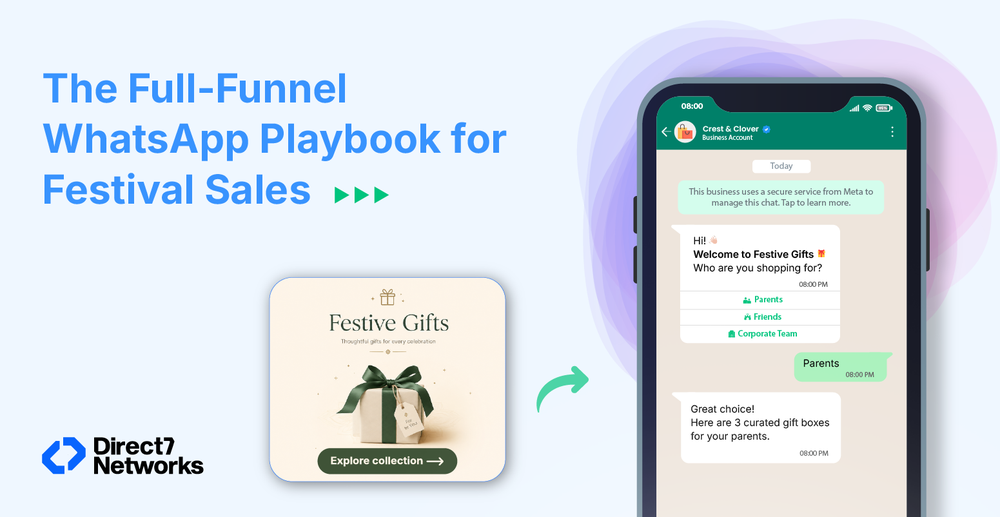
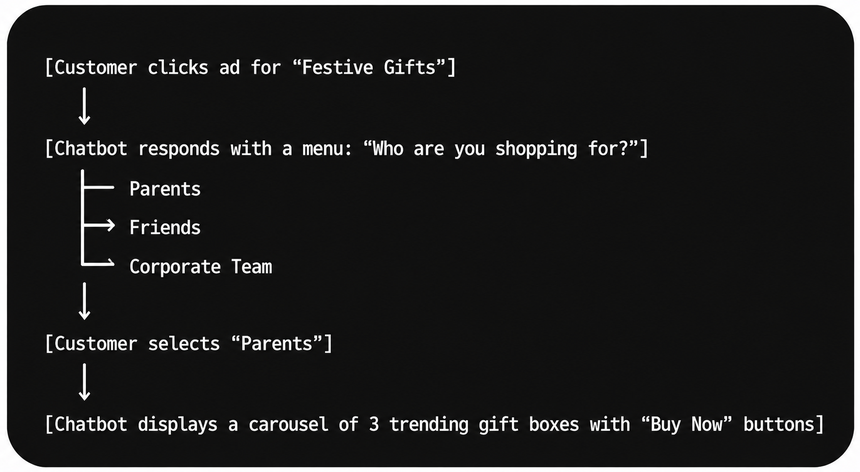
Festival shoppers are overwhelmed. They have 12 tabs open, three group chats asking for gift ideas, and a shrinking attention span. A WhatsApp chatbot can do something no ad can: have a conversation.
Picture a home decor brand during Christmas. A shopper sends "I need a gift under ₹2000." The chatbot asks a few questions, who it's for, what style they prefer and responds with three curated product recommendations, complete with images and a buy link. No scrolling through a category page. No dead ends. Just a guided path to purchase.
This kind of consultative experience works especially well for gift-heavy festivals where buyers often don't know exactly what they want.
Drive Traffic: Online and Offline
Push Footfall and Digital Traffic with Targeted Messages
For brands with physical stores, WhatsApp is an underused traffic driver. A well-timed message, "Exclusive in-store Diwali collection, only 3 days left, show this message at the counter for 15% off", can convert a passive customer into an in-store visitor.
For e-commerce, pairing click-to-WhatsApp ads with a time-sensitive offer creates urgency without feeling cheap. "Early access for our WhatsApp subscribers, sale opens tonight at 8 PM" works because it makes the recipient feel like an insider, not a target.
Use Utility Messages to Create Momentum
Utility messages,order reminders, sale countdowns, early-access alerts, appointment confirmations, aren't just operational. During festival season, they build anticipation. A three-day countdown to your Eid sale, sent as a short daily message, creates a drumbeat that keeps your brand top-of-mind without being pushy.
WhatsApp Flows can also handle in-store appointment bookings or virtual shopping slots during peak periods. Instead of customers showing up and facing long queues, they book a slot and arrive ready to buy, better experience for them, better conversion for you.
Recover: Win Back Lost Revenue
Abandoned Cart Recovery via WhatsApp — Timing Is Everything
Roughly 70% of online carts get abandoned. During festival season, that number can be even higher, shoppers are comparison-shopping aggressively and often get distracted mid-checkout. WhatsApp is the most effective recovery channel available.
The key is a sequenced approach, not a single blast. A gentle reminder 30–60 minutes after abandonment ("Looks like you left something behind, your Diwali hamper is still waiting") catches shoppers while the intent is still warm. If they don't convert, a second message 24 hours later can add social proof or address a potential objection. A third, 48 hours out, can introduce a small incentive, but only then. Jumping straight to discounts trains customers to abandon carts on purpose.
Keep the tone conversational, not transactional. Festival season messages that feel human outperform templates that read like automated alerts.
Re-engage Lapsed Customers with Festival-Specific Win-backs
Customers who haven't bought from you in 6–12 months aren't lost, they're just quiet. Festival season is the highest-converting window to bring them back, and WhatsApp is the best channel to do it.
Avoid sending generic "We miss you" messages. Instead, acknowledge the season and tie it to something specific: "It's Eid and we've got a gift you'll love, here's something we picked for you based on your last order." That level of personalisation signals that you remember them. It converts at meaningfully higher rates than a cold broadcast.
Retain: Keep Buyers Coming Back After the Festival
Post-Purchase Communication That Builds Trust
The sale isn't the end of the relationship, it's the beginning of the next one. Festival seasons tend to involve delayed deliveries, high order volumes, and anxious customers. Proactive WhatsApp updates, order confirmed, dispatched, out for delivery, dramatically reduce support queries and build trust at a moment when competitors are often silent.
A brand that sends a "Your Diwali order is on its way, here's your tracking link" message doesn't just reduce anxiety. It creates a positive association that customers remember when the next festival rolls around.
Plant the Seed for Next Season
Two to three weeks after the festival, when the dust has settled, send a short message that bridges to the next seasonal moment. A Christmas buyer is a good candidate for a New Year offer. A Diwali buyer is a natural fit for Holi or Valentine's promotions. The post-purchase window, when sentiment is high and the brand experience is fresh, is the cheapest moment to lock in a repeat buyer.
A brand that sends a "Your Diwali order is on its wayhere's your tracking link" message doesn't just reduce anxiety. It creates a positive association that customers remember when the next festival rolls around.
| Campaign Stage | Message Objective | Key Element to Include |
|---|---|---|
| Pre-Season | Preference Gathering | Interactive buttons via WhatsApp Flows to segment interests. |
| Launch Day | Early Access Drop | Deep link directly to a pre-filled cart or collection page. |
| Mid-Season | Consultative Gifting | Chatbot menu offering curated gift guides based on budget. |
| Peak Scarcity | Shipping Cut-off Alert | Clear deadline to guarantee delivery before the festival. |
| Post-Season | Gratitude & Retention | Thank-you note paired with a feedback link or future discount. |
The Festival WhatsApp Playbook: 5 Messages to Schedule
Use this as a quick scheduling guide before your next festival:
- Pre-festival lead capture (3–4 weeks out) A click-to-WhatsApp ad offering early access, paired with a Flow that collects preferences and segments the lead automatically.
- Personalised teaser (1 week out) A message to your existing list, segmented by past behaviour, previewing what's coming, new products, exclusive bundles, or subscriber-only pricing.
- Launch day message (day of sale) Short, punchy, with a direct link. No lengthy copy. Festival shoppers are scanning, not reading.
- Abandoned cart recovery (1–2 hours post-abandonment) Warm, conversational, no pressure. Product image included if possible. Reserve the discount for message three, not message one.
- Post-purchase update + re-engagement seed (3–5 days after delivery) Confirm the order arrived, invite a review, and close with a soft bridge to your next seasonal moment.
The brands that win during festival seasons aren't the loudest, they're the most relevant. WhatsApp, used with proper segmentation, well-timed sequences, and genuine personalisation, gives you the infrastructure to be exactly that.
This week: audit your existing WhatsApp contact list. Identify three segments you can message differently based on past behaviour. Build one personalised message template for each. That's the foundation everything else sits on, and it takes less than a day to set up.